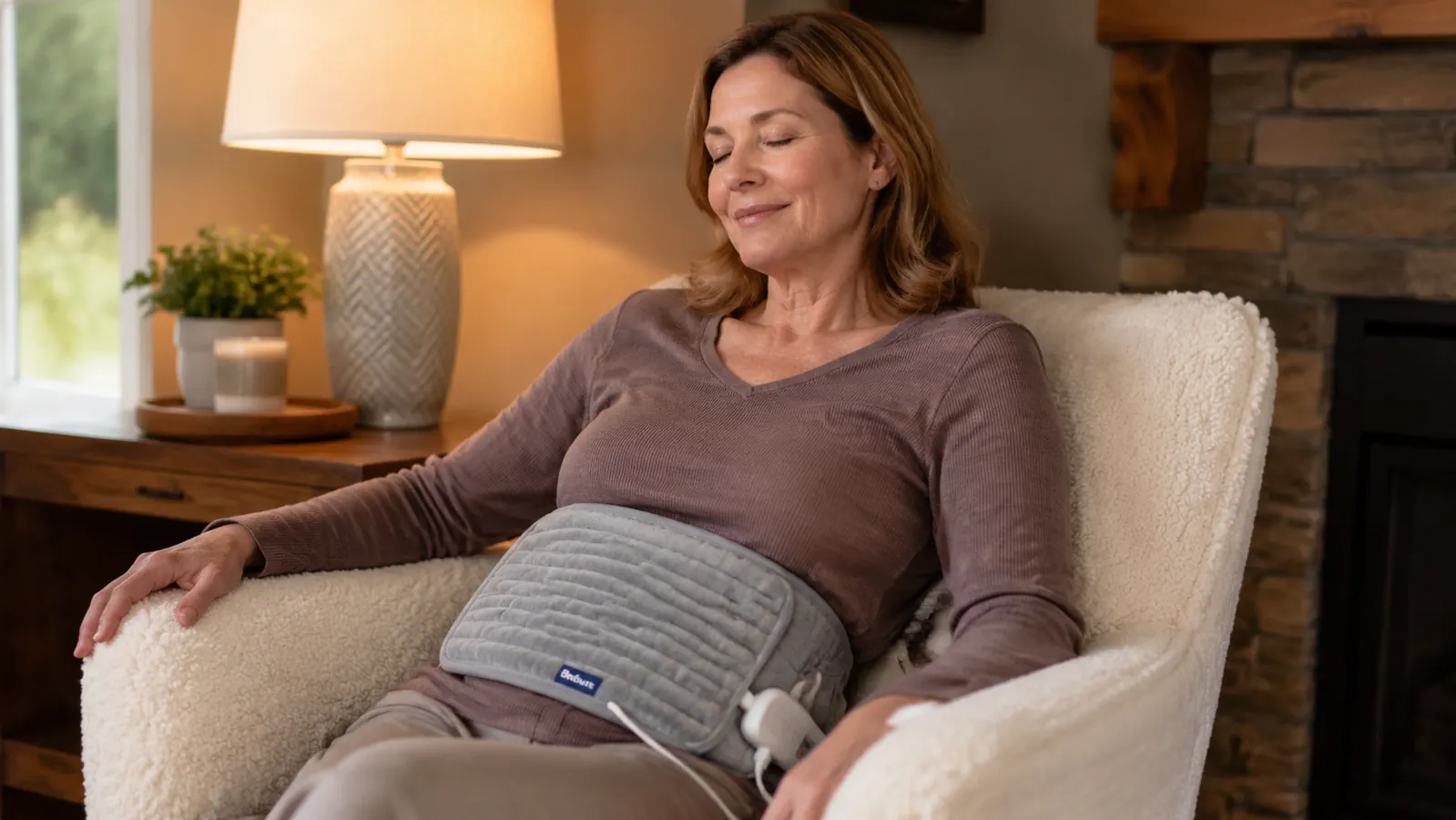
My neck and shoulders had been giving me grief for the better part of a year. Between morning strength sessions, long desk hours, and an old rotator cuff issue that flares up whenever I push overhead volume too fast, I had been rotating through foam rollers, lacrosse balls, and the occasional bag of frozen peas. None of it was wrong exactly. None of it was particularly convenient either. A coworker mentioned she had picked up a Bedsure heated neck pad and liked it, so I grabbed one. That was five months ago. I have now used it basically every weekday, sometimes twice a day, and I have a fairly clear picture of what it does well and where it falls short.
Full disclosure upfront: the Bedsure is a 4.2-star product on Amazon, not a 4.7. That gap matters. It means this pad has real fans and real critics, and after five months I understand both camps. This review covers the long-term experience: how heat and vibration hold up over repeated use, where the design makes sense, and the specific things that will either bother you or not depending on your use case.
The Quick Verdict
Solid heat delivery and useful vibration at a low price point, but the auto-shutoff is aggressive, the cord placement is awkward, and the fit works better for narrow shoulders than broad ones.
Amazon Check Today's Price →Neck and shoulder tension eating into your recovery? The Bedsure combines heat and vibration in one compact pad at a price that makes it easy to try.
Over 3,000 buyers have weighed in. Here is the current price and availability.
Amazon Check Today's Price on Amazon →How I Have Used It
My protocol has been consistent. After my morning workout, I sit down with coffee, drape the Bedsure across the back of my neck, and run it for 15 to 20 minutes. Some days that is high heat with vibration on, when the shoulders are genuinely sore. Other days it is medium heat and no vibration, just a warm compress while I read. On the days I skip the gym but spend five hours in back-to-back video calls, I will sometimes grab it again in the afternoon when my trap area starts to tighten up. Between the two use cases, it has logged somewhere around 130 to 140 sessions.
My frame of reference: I am a 44-year-old who lifts four days a week, runs two days, and sits at a desk the other hours. My neck and shoulder tension is roughly half workout-related and half posture-related. The Bedsure is not a massage gun and it is not a compression boot. It is a heat-plus-light-vibration tool, and that is the lens through which this review makes sense.
I did not use it for any diagnosed medical condition. If you have a specific injury, nerve issue, or chronic pain situation, that conversation belongs with your doctor or PT, not a product review. This is strictly recovery and comfort territory.
Heat Output and Settings
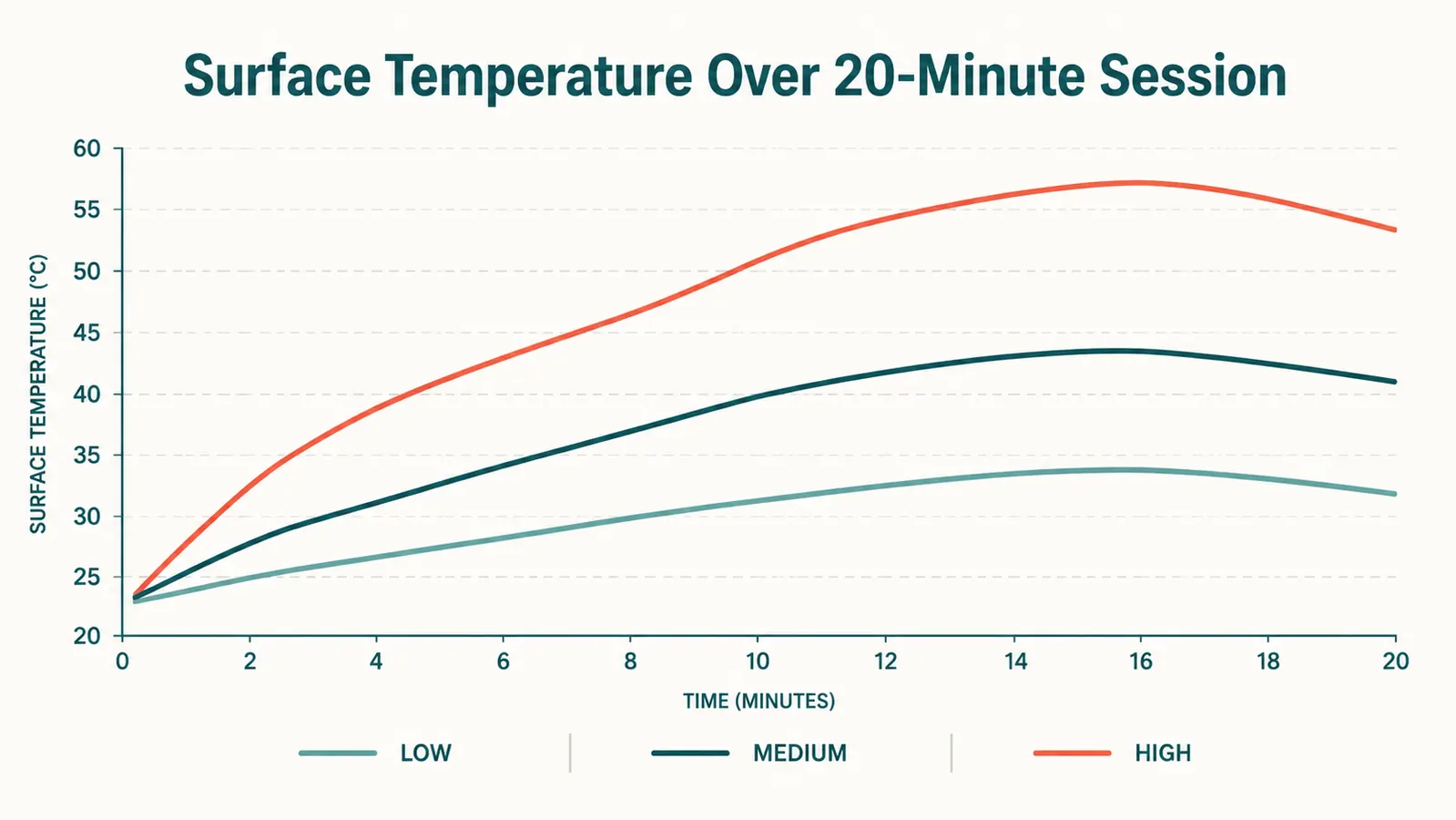
The Bedsure has three heat levels. Low is genuinely mild, barely warm against the skin when you first place it. Medium is where most people will live, producing steady, even warmth that gets noticeable within the first two to three minutes. High gets warm fast, and I mean warm in a useful way: not burning, but clearly therapeutic. After about ten minutes on high, my shoulders feel noticeably less locked up. That is what heat is supposed to do: increase local blood flow and reduce that clenched, restricted feeling in tight muscle tissue.
Where I ran into friction was heat consistency over time. On medium and high, the pad holds its temperature well for the first 12 to 15 minutes. After that, the surface temperature does not drop dramatically, but I noticed a plateau effect where additional heat benefit stopped accumulating. This is not a flaw specific to Bedsure; it is how resistance-based heating elements work. But if you are expecting heat to keep building through a 30-minute session, temper that expectation.
One detail worth noting: the heating element feels most concentrated in the center of the pad. The edges, particularly the far ends that drape down toward your chest, are noticeably cooler. For a neck-focused session that is fine. If your primary target is the upper trap muscle sitting right at the base of the neck, the coverage is good. If you want full lateral shoulder coverage, the pad narrows before it reaches that far.
Vibration: Useful or Just a Feature?
I went in mildly skeptical about the vibration. Light percussive vibration on a flat heating pad does not carry the same depth as a massage gun or even a high-end foam roller. So I went into those first few sessions expecting it to feel gimmicky. My honest verdict after five months: the vibration adds something, but not in the way I expected.
What it actually does is provide a kind of surface-level oscillation that helps the heat feel more distributed and less static. Running it at the lowest vibration setting alongside medium heat turns a simple heat compress into something that feels more dynamic. On mornings when my neck is particularly stiff, that combo noticeably speeds up how quickly the area loosens. On days when the soreness is mild, I skip the vibration entirely. The highest vibration setting is buzzy in a way that I found distracting rather than therapeutic, so I basically never use it.
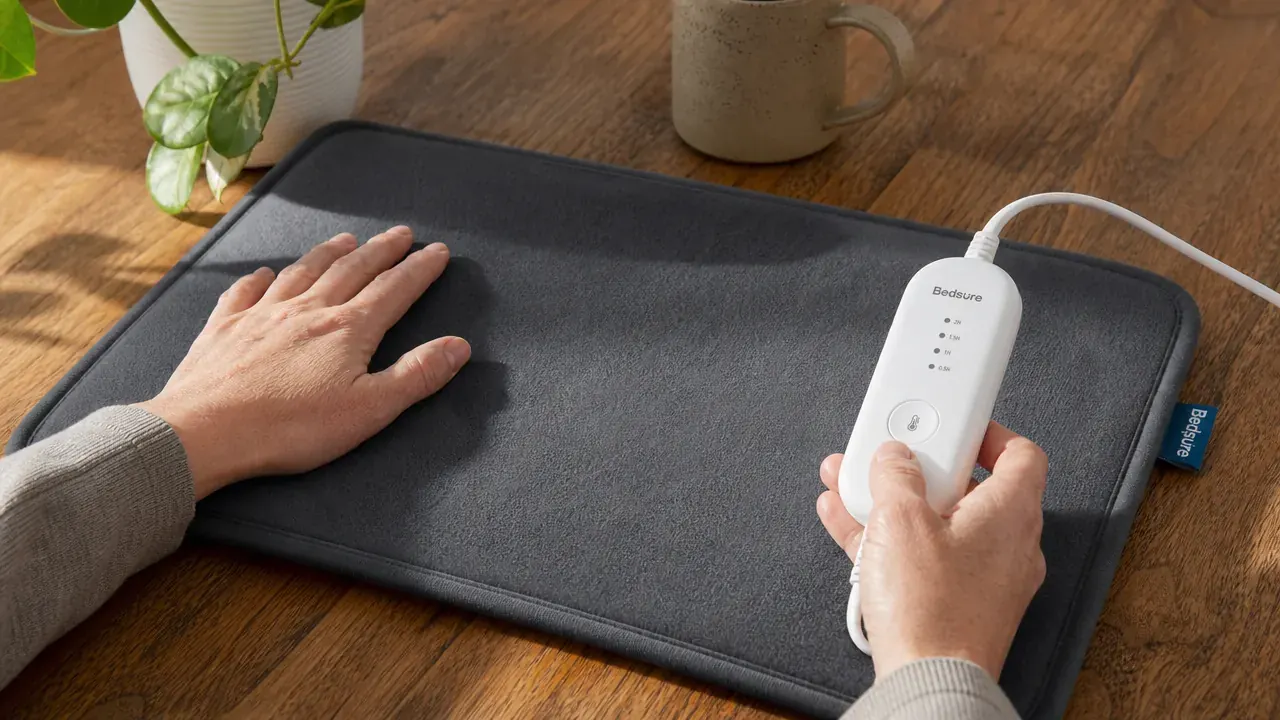
The vibration motor is quiet enough that you could use this in a shared room without bothering anyone on the low setting. The high setting produces a low-frequency hum that is audible from across the room. Not loud, but present. That matters if you share an office or bedroom with someone who is sensitive to background noise.
The Weighted Design and Fit
Bedsure calls this a weighted heating pad. In practice, the weight is modest. It is heavier than a standard flat heating pad, and that weight does help it drape more naturally over the neck and shoulder curve instead of sliding around. But I would not overstate this. It does not provide meaningful pressure. It stays put better than a lightweight pad and provides a gentle downward pull that feels comfortable, not like targeted compression.
Fit is where the product polarizes buyers, and it polarized me too for the first few weeks. I have fairly broad shoulders, 46-inch chest, and the pad fits my neck well but the drape is short. The ends barely reach my upper chest when worn correctly. For someone with narrower shoulders or a shorter neck, the fit likely feels snug and well-placed. For larger frames, you may find yourself repositioning it frequently to keep the heat where you want it. This is probably the single most common frustration in the negative reviews, and it is legitimate.
The heat-plus-vibration combo loosened up my neck faster than ice or a foam roller on most mornings. The auto-shutoff, though, cut sessions short at the worst possible moment.
The Auto-Shutoff Problem
This is the part of the Bedsure that drew the most friction in my five months of use. The pad shuts off automatically after 15 minutes. Every time. No option to extend the session without manually pressing the button again to restart. I understand why the feature exists: it prevents overheating and is a safety measure. But 15 minutes is short for a proper heat therapy session. Most guidance on heat therapy suggests 15 to 20 minutes as a minimum useful window. So the pad is cutting off right at the edge of useful.
In practice, I restart it immediately when it shuts off and run a second cycle. That works. But it interrupts whatever else I am doing, which is annoying when I am trying to use a recovery tool passively while reading or on a call. Competing pads at similar price points often have 30-minute or even 60-minute timers. If session interruption would bother you, this is worth knowing before you commit.

Durability After Five Months
At around 130 sessions in, the pad is still functional. The fabric has held up without pilling or fraying, which matters since I have been tossing it on a shelf rather than storing it carefully. The cord connection, which I initially worried about since it plugs in at one end and the cord is fairly rigid, has not shown any fraying or loose connection. The buttons still register cleanly. The heat output feels consistent with where it started.
What has shown minor wear: the inner material near the edges has shifted slightly, creating a subtle unevenness in how the pad drapes. It is not dramatic and it does not affect heat delivery, but the pad no longer lies perfectly flat the way it did when new. If you are the kind of person who notices that sort of thing, you will notice it.
The cord is also stiffer than I would prefer. It makes the pad slightly awkward to position when you want to lean back in a chair, because the cord tugs from one side. Bedsure positions this as a neck-and-shoulder pad, but the cord placement makes it better suited to sitting upright than reclining. For desk use it works well. For couch use with full recline, less so.
What I Liked
- Genuine heat on medium and high settings that reaches useful therapeutic warmth within a few minutes
- Combined heat and low-level vibration creates a more dynamic feel than a plain compress
- Weighted drape keeps the pad in place better than lightweight alternatives
- Fabric is durable and has held up well through 130-plus sessions
- Quiet enough on low vibration for use around others
- Price point makes it easy to try without a significant commitment
Where It Falls Short
- Auto-shutoff at 15 minutes interrupts sessions at a frustrating moment
- Heat coverage narrows toward the edges; does not reach outer shoulders on broader frames
- Stiff cord tugs to one side, limiting comfortable positions when reclining
- Vibration on high setting is buzzy rather than therapeutic
- Fit works better for narrower shoulders; larger frames will reposition frequently
- Heat does not build progressively through a long session; plateaus around the 12-minute mark
How It Compares to What I Used Before
Before the Bedsure, my go-to for neck and shoulder tension was a standard microwaveable grain bag and occasional foam roller work on the thoracic spine. The grain bag required reheating every 10 to 12 minutes and cooled unevenly. The foam roller reached my mid-back but never addressed the top of my shoulder and neck in any satisfying way.
The Bedsure is meaningfully better than both for the specific target area of neck and upper traps. Electric heat is more consistent than microwaved grain. And the vibration, even at modest intensity, does something a static compress cannot. That said, I have read comparisons against Sunbeam heating pads and other established brands, and the Bedsure's main advantage is form factor: the neck-drape design keeps the heat where you actually want it. A flat Sunbeam pad can cover a larger area but slides around on the shoulders in a way the Bedsure does not. If you want more detail on how those two compare on the full list of specs, the Bedsure vs Sunbeam comparison breaks it down feature by feature.
Who This Is For
If you sit at a desk for several hours a day and your neck tightens up by afternoon, the Bedsure will probably work well for you. It is straightforward to use, warm enough to make a difference, and light enough to keep on your desk without dedicating space to it. The same is true if you train regularly and want a simple tool for post-workout neck and shoulder warm-down, where a 15-minute heat session is exactly the right length. Narrow to average shoulders will get the best fit. Budget-conscious buyers who want electric heat without paying for a premium brand are also well served here.
It is also worth mentioning that heat therapy, when used correctly, can be a legitimate part of a recovery routine. For the general muscle tightness and delayed-onset soreness most active adults deal with after hard sessions, the case for heat over ice is real. A solid breakdown of that case is in 10 reasons a heated massage pad often beats ice for everyday post-workout soreness, which covers when heat makes more sense than cold therapy and why.
Who Should Skip It
If you have a large frame with broad shoulders, the fit is going to frustrate you. The drape ends before it reaches the lateral shoulder on most large-framed users, which means the heat misses part of the muscle group you are targeting. In that case a flat electric heating pad with a larger surface area, placed on a flat surface while you lie down, would give you better coverage. If you also have any tendency to fall asleep during recovery sessions, the 15-minute auto-shutoff becomes an advantage rather than a limitation, but if you need long uninterrupted sessions to get the full benefit, that timer will wear on you quickly. Finally, if you are looking for deep tissue relief, this is not the right tool. The vibration is mild and the heat is surface level. A massage gun or foam roller will get you further for deep muscle release.
Five months in, the Bedsure is still on my shelf and still part of my morning routine. If the fit and the 15-minute session limit are not dealbreakers for your use case, it punches above its price point.
Check the current price and see whether it is in stock before deciding.
Amazon Check Today's Price on Amazon →