
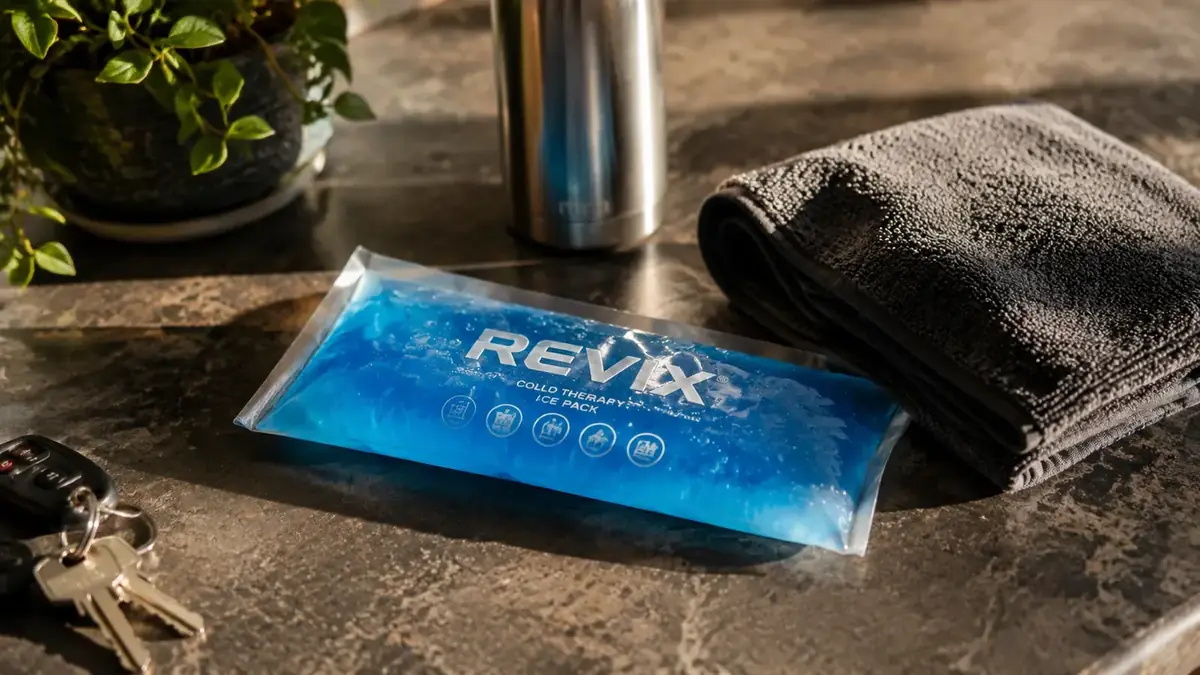
There is a version of this review I could write that would take me about ten minutes. Product arrived, felt cold, strap worked, four stars. That is not this. My partner Diane, who runs half marathons and has a chronic right hip flexor issue, started using the REVIX at the same time I picked one up for my shoulder. We have been rotating two units between us for the better part of a year, running them through freeze cycles after almost every training day. By now we have a clear picture of what this pack actually is, what catches you off guard, and what the listing page does not bother telling you.
I want to cover the things most reviews skip: whether the strap elastic degrades, what happens to the gel after serious repeated use, how the size choice plays out for different builds, and a few honest notes on the applications where the REVIX is not the right tool. If you are shopping with 30 seconds to spare, the short answer is that this pack earns its 4.6 stars. If you want to buy it knowing exactly what you are getting into, read on.
The Quick Verdict
A genuinely durable, well-gelling cold pack that holds up under real repeated use. The strap needs a few sessions to dial in, the size choice matters more than the listing suggests, and the hip flexor is one area where it underdelivers. For back, shoulder, and elbow icing, it is the best value in this price range.
Amazon Check Today's Price →Still searching while that soreness isn't going anywhere? Check today's price.
The REVIX has over 8,900 reviews at 4.6 stars for a reason. Budget-friendly, holds cold for 25-plus minutes, and ships Prime. See the current price before it moves.
Amazon Check Today's Price on Amazon →Thing 1: The Gel Does Not Migrate, But It Does Firm Up Differently Than You Expect
The first question Diane and I had after a few months was whether the gel would start pooling toward one end or corner of the pack with repeated use. This happens with cheaper options. You end up with a thick cold spot on one side and a near-empty warm film on the other. After our combined 200-plus cycles, the REVIX gel has stayed evenly distributed. That is not a given at this price. It is the thing that separates it from the four-dollar drugstore alternatives.
What did catch us off guard: the gel texture changes slightly depending on freeze depth. From a four-hour partial freeze, the pack is pliable throughout and conforms easily. From an overnight hard freeze, the center of the pack firms up noticeably while the perimeter stays more flexible. Neither version is bad, but the behavior is different. If you pull a hard-frozen REVIX out and try to immediately bend it around a shoulder joint, it resists more than you might expect for the first two or three minutes. Give it a minute on your skin and it softens into shape. Just know it is not uniformly pliable right out of a 12-hour freeze.
Thing 2: The Strap Elastic Holds, But the Clip Is the Weak Link
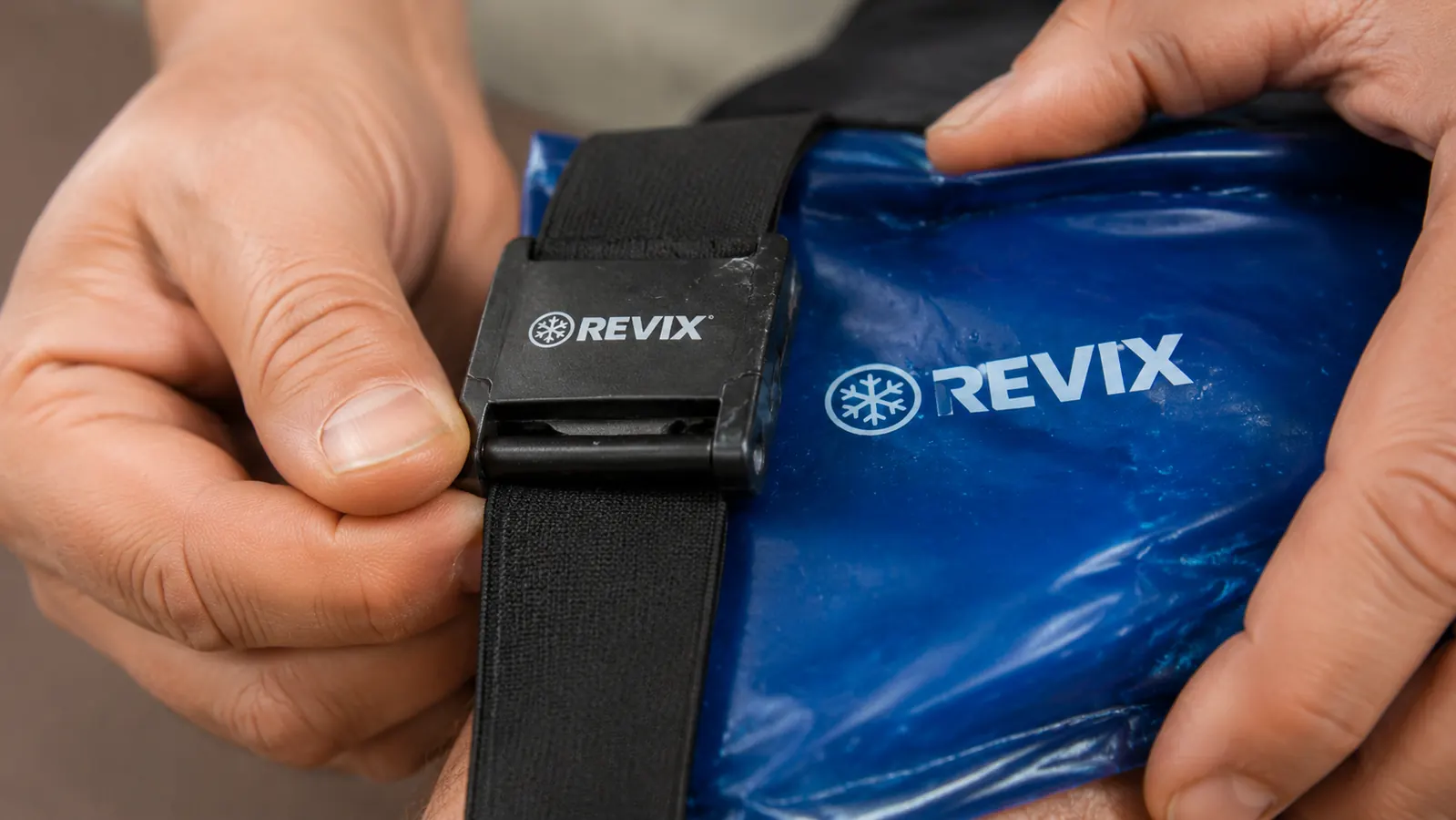
The elastic on both our straps has held its tension across the full test period. No bagging out, no loss of compression. That was the part I expected to fail first, and it has not. The clip is a different story. On my unit, the clip hinge has developed a small creak and the snap-in feel is less crisp than it was in month one. It still functions and holds secure, but you can tell the plastic has seen some wear. Diane's unit is similar. Neither has failed outright.
If I had to predict where this pack eventually calls it quits, it will be that clip. Not the seam, not the gel, not the elastic. The clip. At the price point this pack sits at, a replacement clip or a spare strap sold separately would be a smart thing for REVIX to offer. They do not, as far as I can tell. When the clip eventually goes, the workaround is an athletic wrap or a towel clip to hold the pack in place. Not ideal, but functional.
The elastic held up across 200 freeze-thaw cycles. The clip is the part that shows wear first. It still works, but it is the component to watch.
Thing 3: The Size Choice Is More Consequential Than the Listing Makes Clear
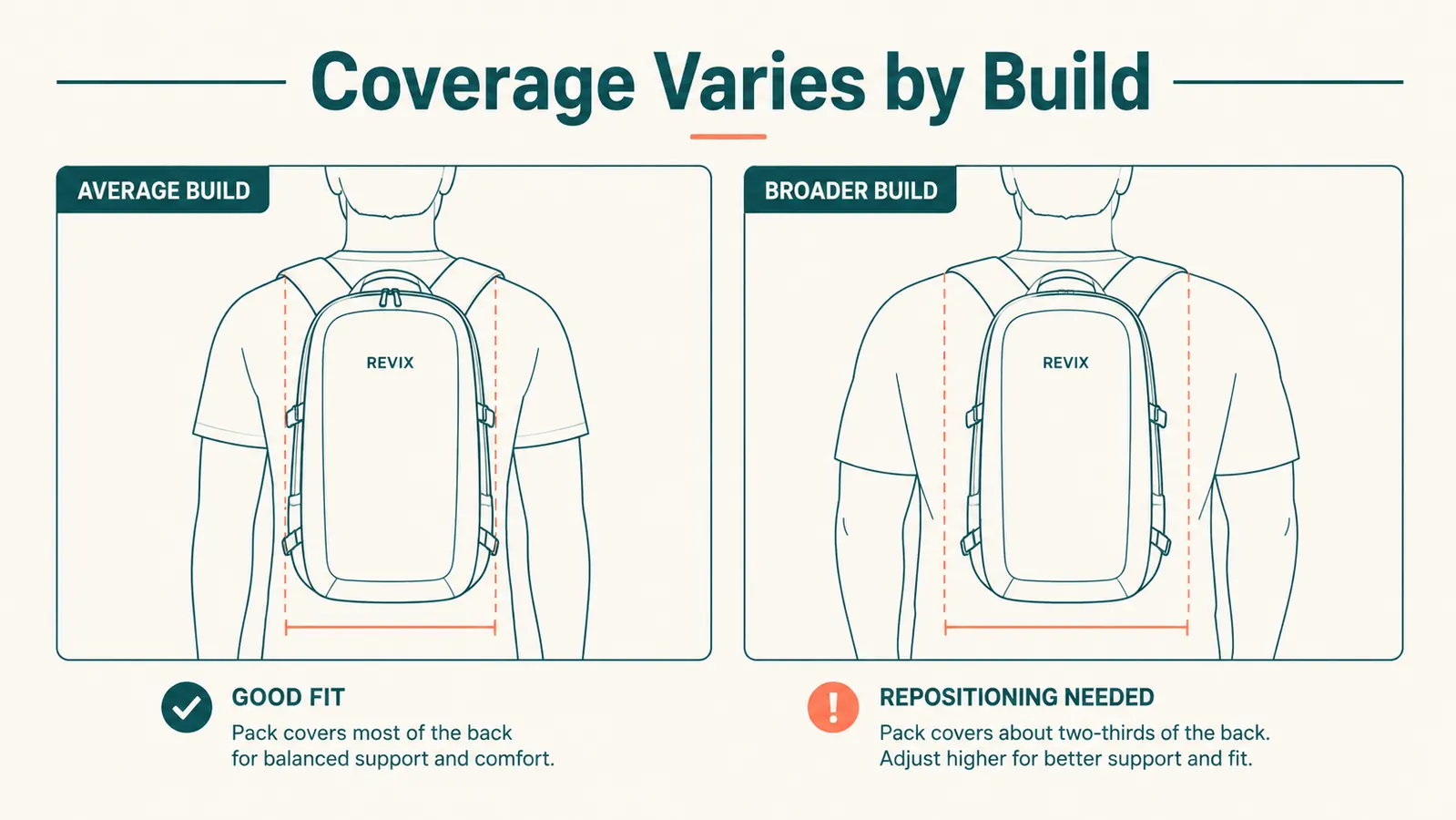
Both Diane and I bought the standard size without looking closely at dimensions. She is 5'4" and around 130 pounds. I am 6'0" and 195 pounds. The same pack behaves noticeably differently on us for lower back applications. On Diane, the standard REVIX covers the majority of her lumbar zone in a single placement and the strap wraps cleanly. On me, the pack covers roughly the central third of my lower back and the strap tension has to be adjusted more carefully to keep it centered. I am not complaining, but if you are a broader build and your soreness spans both sides of the lumbar, know that you are likely buying the larger version.
REVIX does make a larger size. We have not personally tested it, so I will not claim certainty on its performance. What I can tell you is that the standard size is marketed without much guidance on who it suits by body dimension, and that is a gap in the product information. A quick check of your own lower back width against the pack's listed dimensions before buying will save you a round trip.
For shoulder and elbow applications, body size matters much less. Both of us find the standard size appropriate for the shoulder joint and for the outer elbow area. If anything, the pack is slightly oversized for a targeted elbow application, which is not a problem. More coverage is fine when the target is a small area.
Thing 4: Hip Flexor Icing Is Awkward at Best
Diane runs, and her chronic issue is a tight, occasionally inflamed right hip flexor. She went into this hoping the REVIX would be her solution for post-run hip icing. The reality: it works, but the application is genuinely awkward. The hip flexor sits at the top of the front thigh and lower pelvis, which is an angled surface that resists flat pack placement. The strap cannot easily circle the hip joint at that location without being uncomfortably tight around the waist or pulling the pack off axis.
What she settled on was lying flat on her back with knees bent, placing the REVIX directly on the area, and holding it loosely with one hand rather than relying on the strap. It works in that configuration, but it means you cannot really do anything else during the session. For a body part that benefits from icing while you rest anyway, it is acceptable. But if the hip flexor is your primary target, look at packs that come with a hip wrap sleeve designed for that geometry specifically. The REVIX was not built for it and it shows.
Thing 5: Freeze Time From Fully Thawed Matters More Than You Think
When you are icing multiple times per day during a heavy training week, the refreeze window becomes a real operational consideration. The REVIX takes roughly 90 minutes to two hours to refreeze from fully thawed to usable. If you ice at 7am after a morning session, the same pack is not ready again until 9am at the earliest. For most single-session-per-day users, that is irrelevant. For someone who trains in the morning and again in the evening, or who ices both immediately post-workout and again before bed, one pack is not enough.
We rotate two packs between us and it works well. One is almost always ready. If you train hard and ice frequently, budget for two from the start rather than buying one and discovering the rotation problem later. The cost of two REVIX packs is still lower than most single competing products at the next price tier up.

Thing 6: How It Compares to TheraPearl After Long-Term Use
Diane had used a TheraPearl pack before switching to the REVIX, so she has a direct basis for comparison. Her read: TheraPearl's gel beads feel more pliable right out of a deep freeze, which she appreciated during winter months when the freezer ran colder. The REVIX gel is denser and holds cold longer, but requires that brief warm-up period when pulled from a hard overnight freeze. After the first two or three minutes on the body, both packs feel comparably flexible.
On cold retention, the REVIX outlasts the TheraPearl in our experience by approximately five to eight minutes for a 20-minute session. Whether that margin matters to you depends on your session length. For a standard 15 to 20 minute icing window, the REVIX stays effective throughout. For longer sessions, the retention advantage compounds. If you want a formal head-to-head breakdown, there is a full comparison on this site at REVIX vs TheraPearl Cold Therapy that goes deeper than I will here.
Thing 7: The Seams Have Not Moved
I saved this for a standalone section because it is the number one failure point on cheap gel packs and it is worth being explicit: after our combined 200-plus freeze-thaw cycles across two units, neither pack has shown any seam separation, gel weeping, or shell cracking. The outer material has developed a very faint surface texture from repeated freezing and thawing, but there is no structural compromise. The packs do not smell, do not feel different to hold, and do not show any signs of impending failure.
That is genuinely unusual at this price point. We have owned cheaper packs that started leaking within eight to ten weeks of daily use. The REVIX construction is measurably better than that cohort. Whether it lasts another 200 cycles, I cannot promise, but the trajectory after the first 200 is encouraging.
What I Liked
- Gel distributes evenly across 200-plus freeze-thaw cycles with no migration or pooling
- Strap elastic retains tension through extended use
- Cold retention outlasts TheraPearl by five to eight minutes in real use
- Seams and shell structurally intact after months of heavy daily cycling
- Works for back, shoulder, and elbow applications across different body sizes
- Price of two units still undercuts most competing single-product alternatives
Where It Falls Short
- Strap clip shows wear and loses crispness before the rest of the pack does
- Standard size undersized for broader builds on lower back applications
- Hip flexor icing is awkward, no sleeve designed for that geometry
- Hard overnight freeze produces a firmer center that needs two to three minutes to soften
- 90-minute refreeze window requires two-pack rotation for multiple daily sessions
The Part Most Reviews Skip: What Actually Breaks First
Every review tells you what works. Nobody tells you what is going to give out and when. Based on our experience, here is the failure sequence we expect: the clip creak becomes a click, the click becomes a loose snap, and eventually the clip stops holding tension without some external reinforcement. That will probably happen sometime in the second year of daily use for us. The gel and seams will almost certainly outlast the clip. The elastic will probably outlast the clip too. If REVIX sold replacement straps, this would be a non-issue. They do not appear to, so factor that in if you are planning on using this pack for years rather than months.
The practical workaround when the clip eventually goes is to use a tensor bandage or athletic wrap to hold the pack in place. Slightly less convenient, but the pack itself will still be perfectly functional. For most buyers, the clip will outlast the typical useful life of a product in this category. I am flagging it because we use ours harder than most.
Who This Is For
The REVIX is the right buy if you train consistently and need a reliable daily-driver ice pack for back, shoulder, or elbow work. You probably already know that a frozen bag of peas is not a long-term solution and that the thin gel pack from the pharmacy will split within a season. You want something that actually conforms to your body, holds cold long enough to cover a full icing session, and does not leak after a few months. The REVIX delivers on all of those. If you have a nagging shoulder that you need to ice after every overhead session, or a lower back that responds well to cold therapy after heavy training days, this is the pack to keep in rotation. You can read a specific use-case story at how cold therapy helped a nagging shoulder ache if you want to see how this plays out in practice.
Who Should Skip It
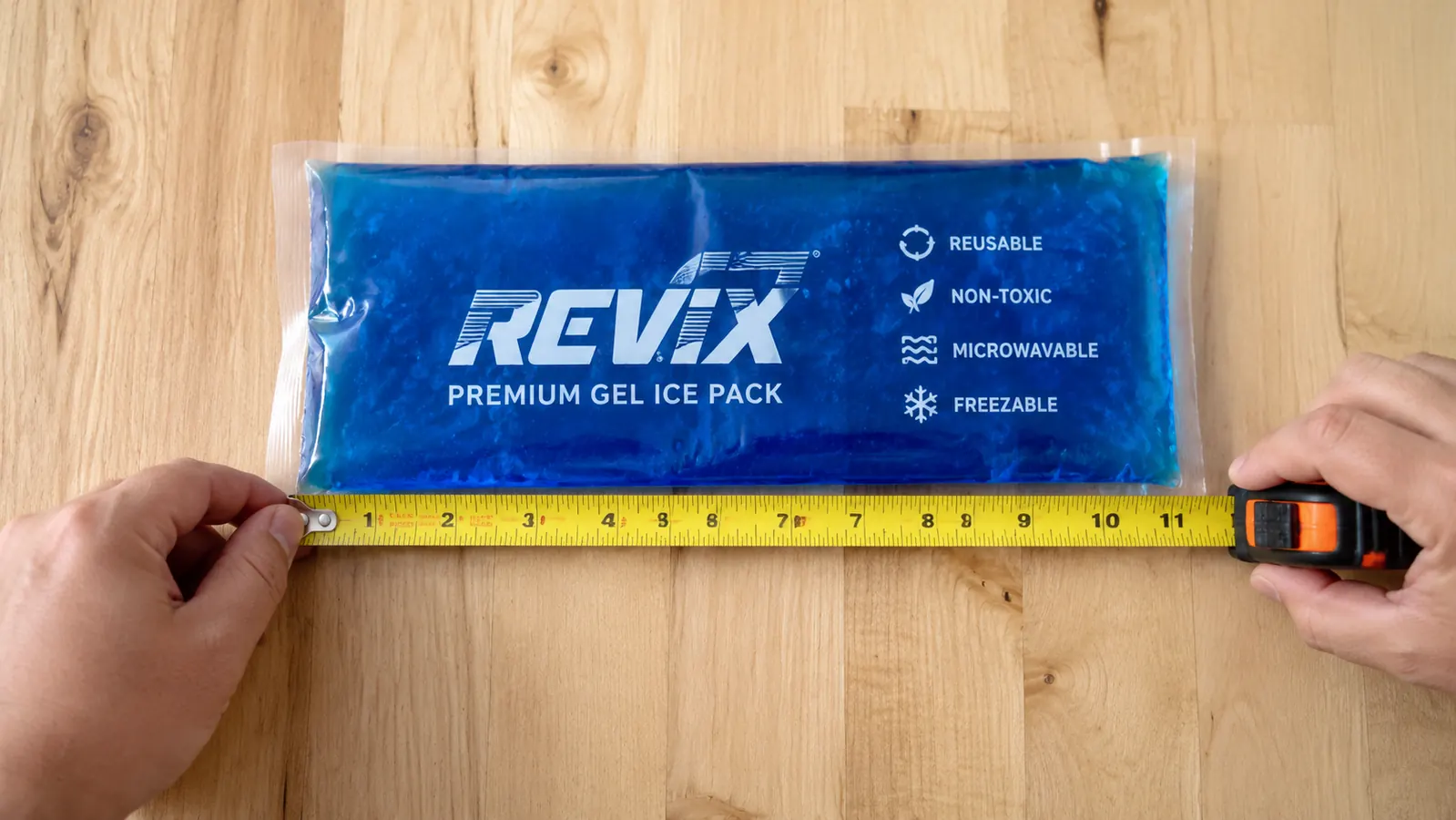
Skip the standard REVIX if your primary target is the hip flexor, or if your lower back spans a wider area than roughly 11 inches across. For the hip, look for a wrap with a pocket designed for the anterior hip geometry. For a broad lower back, consider the larger REVIX size or a competing product with more surface area. Also skip it if you are a once-a-month casual icer. Any cheap gel pack will survive that frequency and there is no point spending more. The REVIX earns its edge through durability under repeated daily use, and that advantage disappears if you are not actually using it regularly.
Two people, 200 freeze cycles, still reaching for it. See what it costs today.
Budget-friendly, 4.6 stars, nearly 9,000 reviews. The strap is better than most competitors in this range and the gel holds up far longer than the cheap alternatives. Check today's price on Amazon before stocking up.
Amazon Check Today's Price on Amazon →