
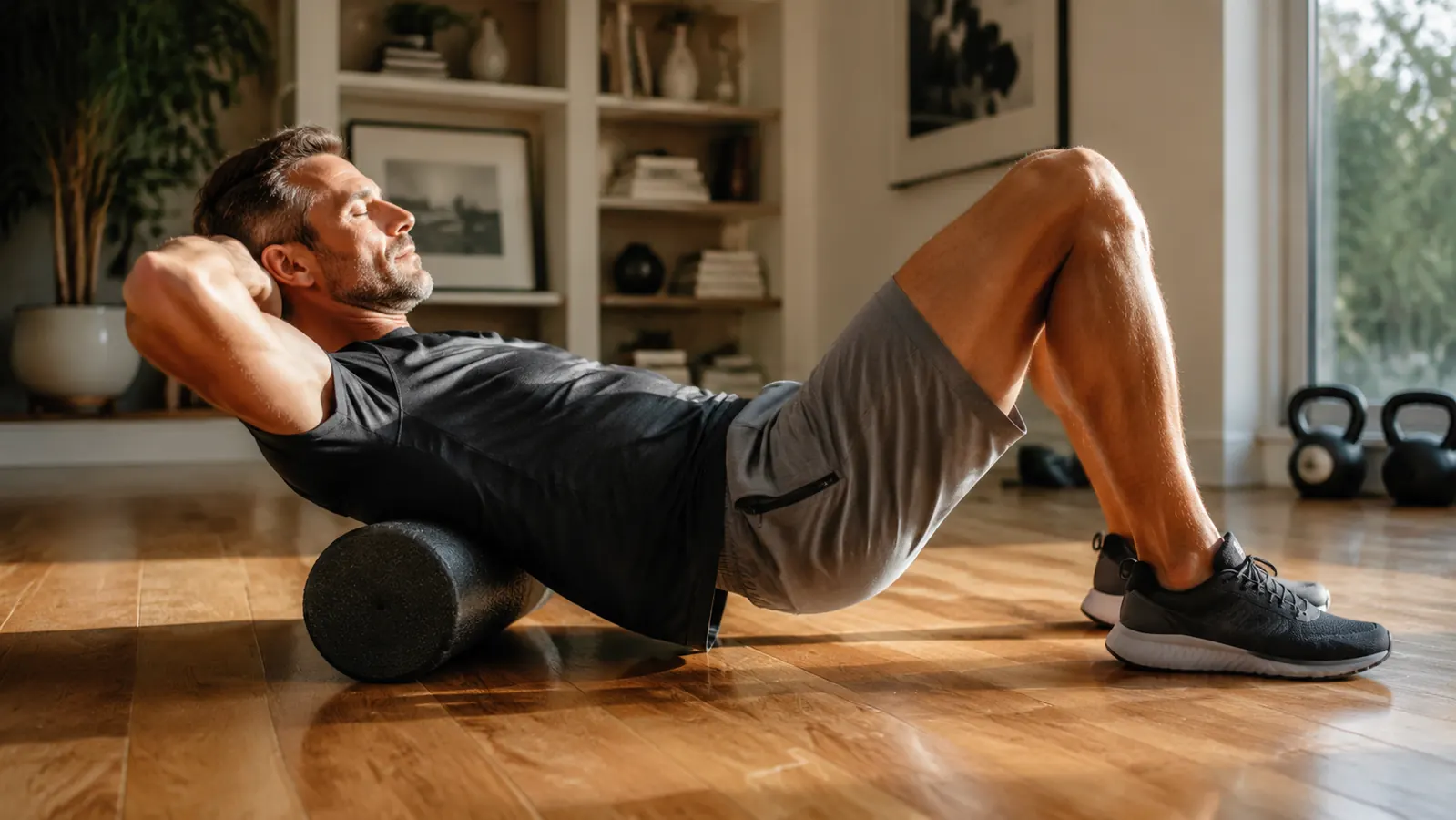
For probably five years, I owned a foam roller that lived in the corner of my home gym. It collected dust except for the occasional guilt-driven session where I'd roll around on my IT band for two minutes, feel nothing particularly useful, and move on. My training partners swore by foam rolling. Physical therapists recommended it. Articles told me I was leaving recovery gains on the table. I was skeptical. A budget tube of hard foam did not feel like the missing piece. That dusty roller got replaced by a Therabody WaveRoller, and the difference is the whole reason I'm writing this.
I'm 48, I run three to four times a week and lift twice, and my recovery has always been the weak link. My quads get heavy, my thoracic spine gets locked up after long runs, and the mornings after back-to-back training days used to involve some creative maneuvering just to get out of bed. I'd tried compression boots, I'd tried massage guns, I'd tried sleeping with an ice pack under my lower back. Some of those things helped. Plain foam rolling did not make the shortlist.
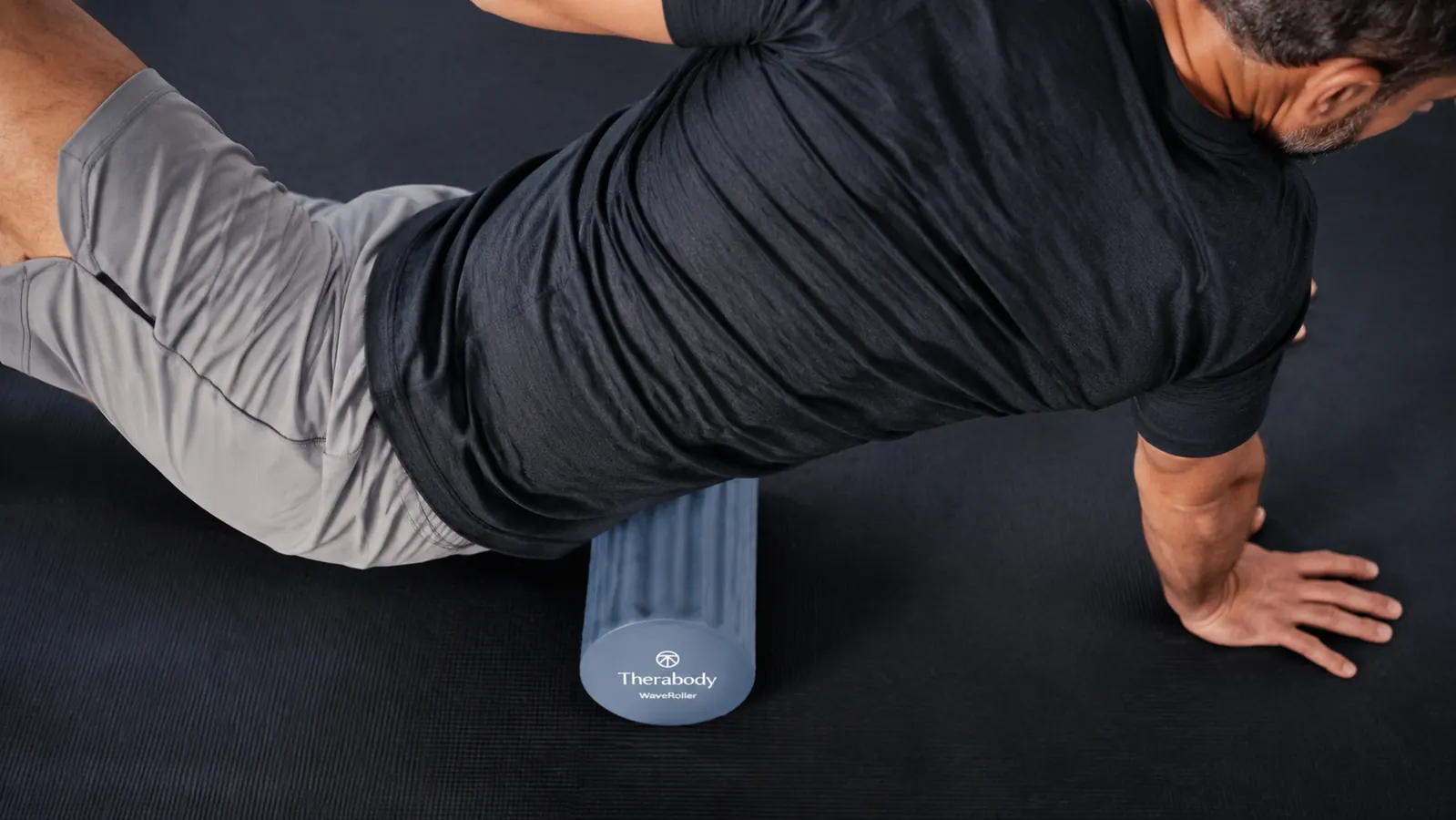
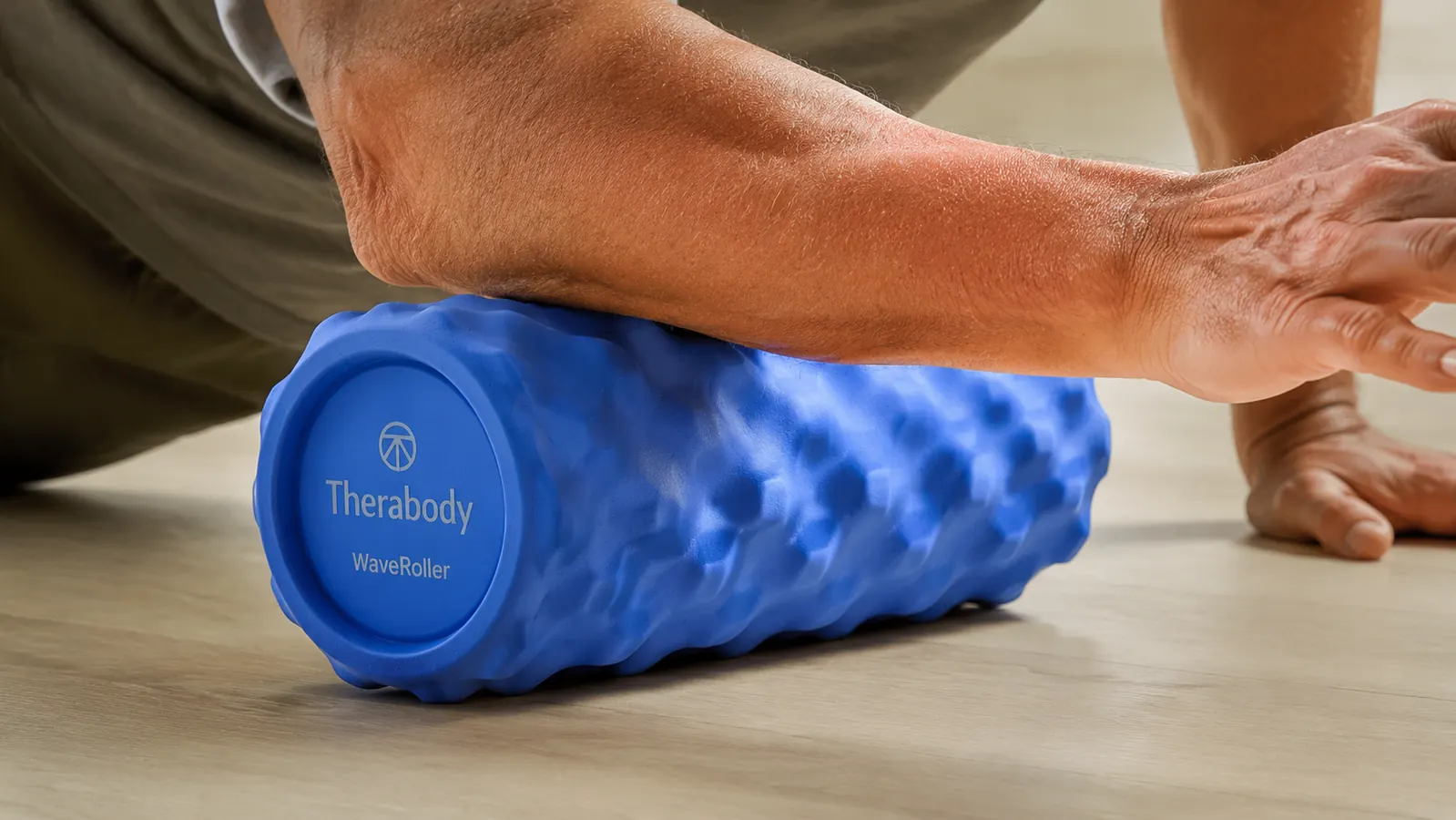
Last fall, a friend who coaches masters swimmers mentioned she'd switched her team to vibrating foam rollers for pre-session warm-up. Her reasoning was specific: the vibration changes how the nervous system responds to pressure on the muscle. A standard roller pushes into the tissue mechanically. A vibrating roller adds a neurological component that seems to reduce the guarding reflex faster, letting you actually relax into the pressure instead of tightening up against it. I have no idea whether that explanation holds up under lab conditions, but it made enough intuitive sense that I ordered the Therabody WaveRoller that week.
It arrived in a compact box, charged up quickly, and the first session lasted about twelve minutes. I worked my quads, my thoracic spine, and my calves on three different vibration speeds. The thing that struck me immediately was how different it felt to relax into the pressure. With my old roller, I'd tense up the moment I hit a tight spot. With the WaveRoller on medium speed, something about the vibration let me breathe through it and stay loose. I'm not going to overstate it. It wasn't a massage therapist. But it was noticeably different from what I'd been doing.
Something about the vibration let me breathe through the tight spots and stay loose instead of tensing up against them. That was new.
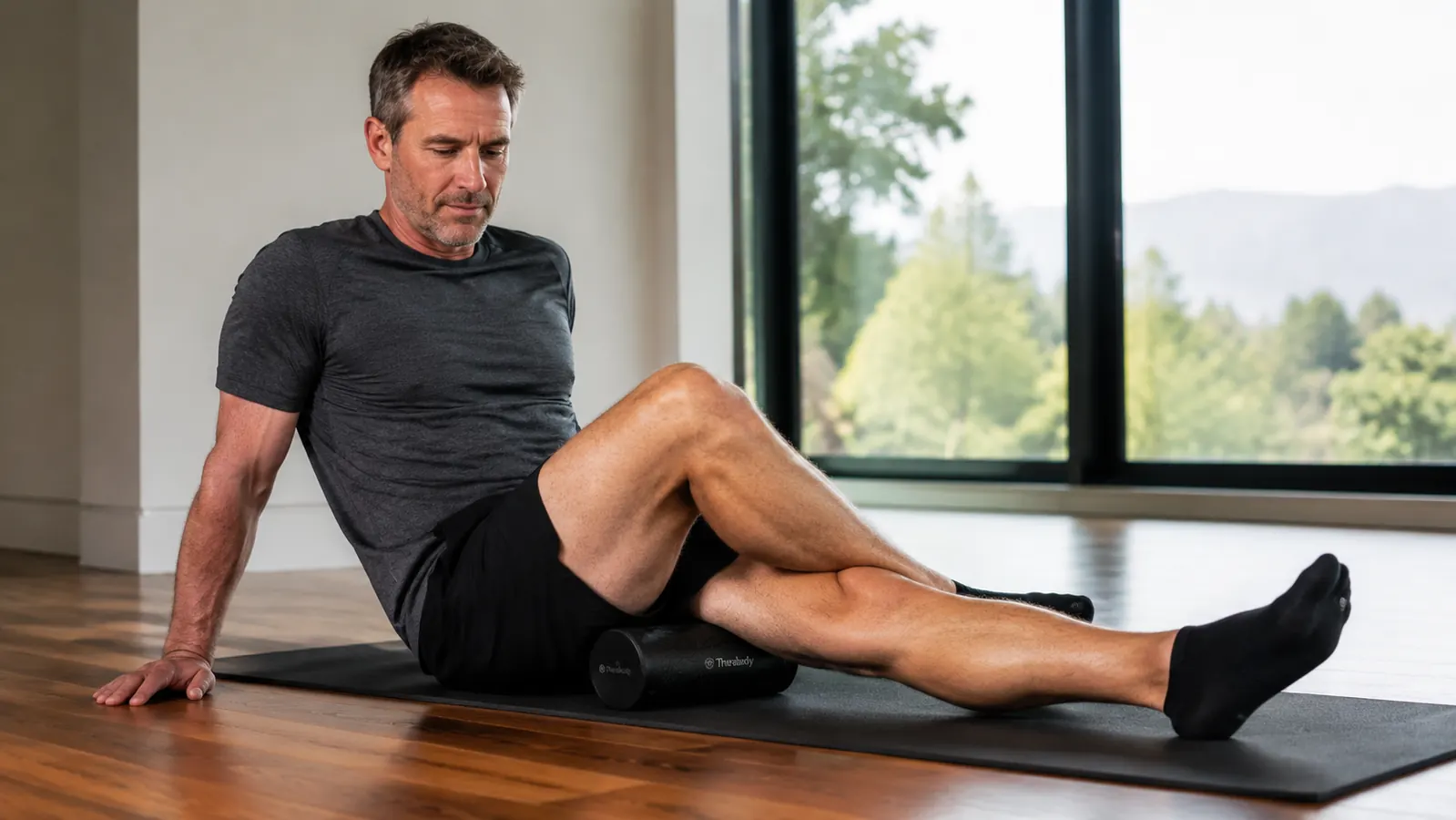
By day three I had established a post-run routine: ten to fifteen minutes on the WaveRoller, starting at the lowest speed on my calves, moving to medium for quads and hamstrings, then high speed along my thoracic spine in the upper back area. That last one, rolling the upper back on high vibration, was genuinely something I hadn't found elsewhere. My thoracic spine had been my most stubborn problem. After two weeks of consistent sessions, the morning-after stiffness in my upper back dropped noticeably. My partner noticed I stopped doing the zombie shuffle from bed to the bathroom on hard training weeks.
There are a few things I want to be honest about. The WaveRoller is not quiet. On high speed it's audible across the room, which matters if you plan to use it while your household is asleep. The battery life is solid enough for a week of daily sessions on a single charge, but you do have to remember to charge it, unlike a plain roller. And it is heavier than a basic foam roller, which doesn't matter for home use but is a real consideration if you were planning to throw it in a gym bag for travel. It fits in a large bag but it takes up space.
The other thing worth saying: I don't think this is a tool for people who are entirely sedentary. If your muscles are not being challenged regularly, there isn't much to release. Where I've found it genuinely useful is in that specific window after a hard session, or the morning after, when muscles are tight and fatigued and you're trying to move things along without needing a 60-minute massage appointment. For that use case, the WaveRoller earns its place.
If post-run stiffness is slowing you down, the WaveRoller is worth a serious look.
The Therabody WaveRoller has over 1,700 reviews on Amazon and a 4.4-star rating. It comes with multiple vibration speeds and charges via USB. It's what I reach for after every hard session now.
Amazon Check Today's Price on Amazon →I still use my old plain roller occasionally, mostly for situations where I want something I can abuse without worrying about it. But the WaveRoller is what I use when I actually care about the outcome. That's probably the clearest way I can put it: the old roller is something I owned. The WaveRoller is something I use.
What I'd Tell You If We Were Sitting at My Kitchen Table
If you have been skeptical of foam rolling because a plain roller never delivered what people said it would, I get it. I was there for years. The vibrating version is a genuinely different experience. It's not a cure for overtraining, it won't replace sleep or good nutrition, and it won't replicate what a skilled massage therapist does with a focused session. But as a daily maintenance tool that fits into a fifteen-minute post-workout routine, it does something a plain roller never could for me.
If you run, lift, cycle, or do anything that loads your legs and back repeatedly, and you've been looking for a recovery tool that actually works on tight muscles rather than just being something you're supposed to do, I'd suggest giving this one a real two-week trial. Use it consistently, work the spots that bother you most, and give your nervous system time to get used to responding to it. Two weeks in, I don't think you'll be reaching for the old plain roller anymore. I'm not.
If you want to go deeper before deciding, I wrote a full breakdown of how it performed over seven months in my full long-term review of the WaveRoller, and there's also a side-by-side breakdown in the WaveRoller vs a standard foam roller comparison if you're still on the fence about whether vibration is worth the upgrade.
Ready to stop guessing and start recovering faster?
The Therabody WaveRoller is the tool I wish I'd tried three years ago instead of writing off foam rolling entirely. Check current availability and pricing on Amazon below.
Amazon Check Today's Price on Amazon →