
For about six months last year I was running four or five days a week, nothing dramatic, mostly 6 to 10 miles at a time. But by Sunday evening my legs felt like two sandbags I was dragging around the house. I'd foam roll, stretch, take contrast showers. All the standard stuff. And I'd feel slightly less awful by Tuesday, then go do it again. The cycle wasn't sustainable, and I knew it.
I'd seen compression recovery boots in physical therapy waiting rooms. The big commercial ones, the kind that cost well over a thousand and up. I filed them under 'things for professional athletes and people with more money than sense.' That was my working assumption for a while.
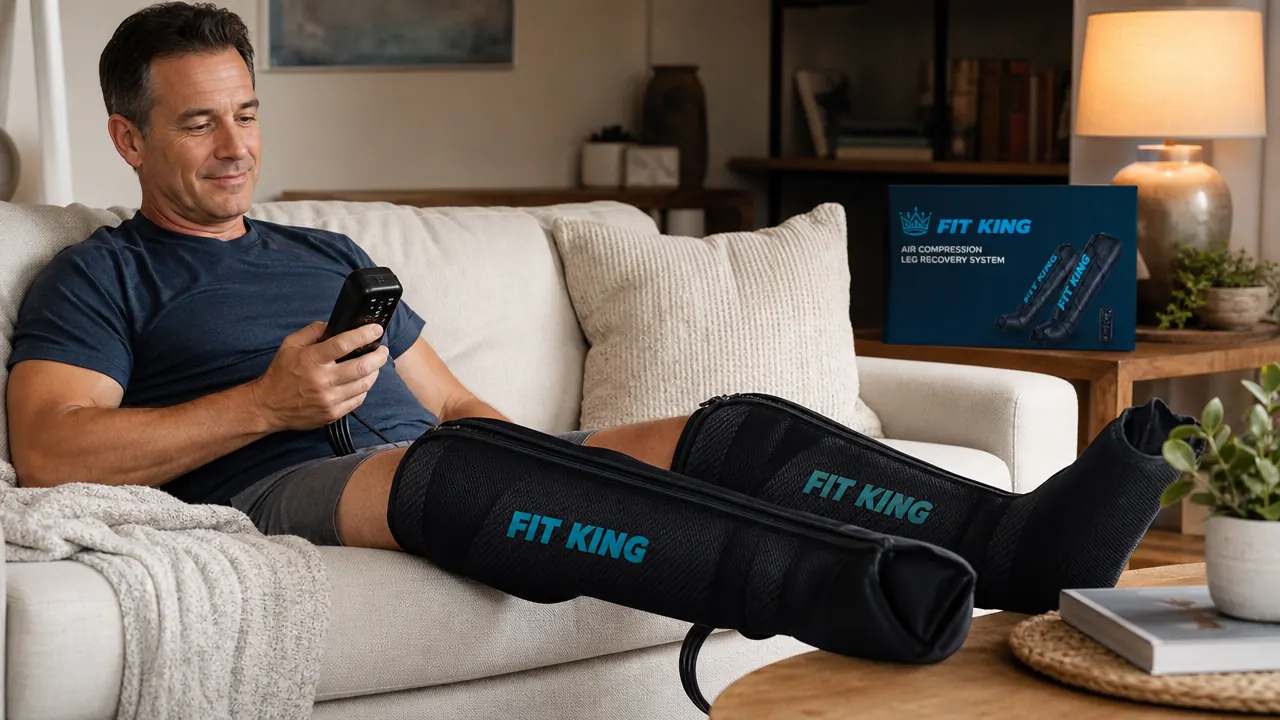
Then a friend who coaches recreational runners mentioned she'd picked up a FIT KING leg massager on Amazon. She wasn't a gear person. If anything she was skeptical of gadgets. That detail stuck with me. I ordered one without a lot of fanfare and figured I'd return it if it felt useless after a week.
I figured I'd return it if it felt useless after a week. I still have it eight months later.
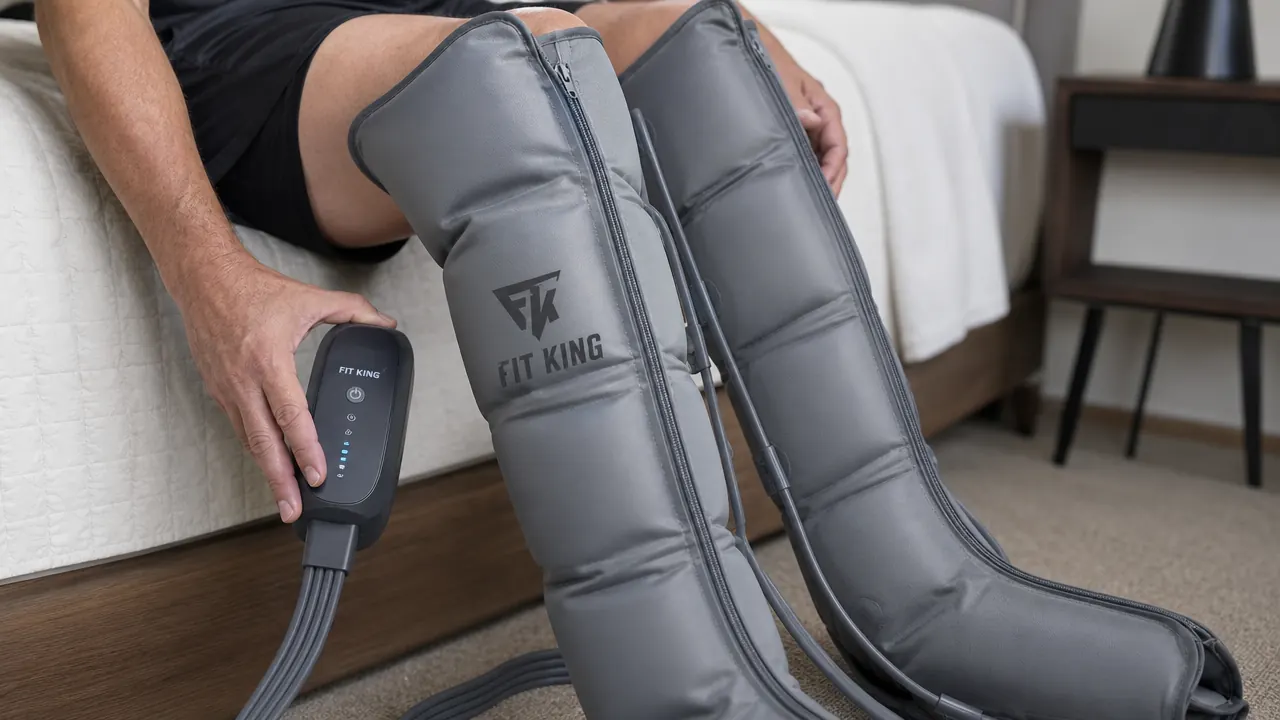
The first session was the Tuesday after a long Sunday run, so my legs were already in that familiar dull ache state. I pulled on the cuffs, which wrap around your calves and feet, and ran the first pressure cycle. It inflates in a peristaltic pattern, squeezing from the foot upward in a wave. The effect is somewhere between a firm massage and the kind of compression you get from a blood pressure cuff, except it moves. I did 20 minutes on the middle intensity setting.
When I stood up I noticed my calves felt noticeably less tight. Not magic, but real. The kind of relief you'd expect after a good manual massage from someone who actually knew what they were doing. I slept well that night. Wednesday I felt better than I usually do mid-week. I kept using it.
After two months I had enough data points to say it was consistently shortening what I've started thinking of as my 'dead leg window.' That window used to run from Sunday afternoon to Tuesday morning. With the FIT KING in the routine, it closes by Monday. That's not a minor thing if your schedule depends on feeling functional at the start of each week.
I want to be honest about what it is and what it isn't. The unit is well-made but not premium. The outer material is a kind of nylon-blend that's held up fine through eight months of regular use, but you can tell it's not a medical-grade device. The controller is small and the interface is basic, four buttons, three intensity levels, a timer. It takes a session or two to memorize without looking. The noise level is moderate, roughly a quiet white noise fan, audible in a quiet room. I watch TV through it without any issue.
The cuffs fit most adult legs without trouble. My calves run toward the larger side at about 17 inches at the widest, and I've had no issues with fit. If you're significantly below average in calf circumference, the fit can feel looser than ideal at lower pressure settings. Worth knowing before you buy.
Your legs don't have to feel like this every week.
The FIT KING air compression massager is the most practical compression recovery tool I've found in the mid-price range. If heavy legs are costing you your midweek training, it's worth a look.
Amazon Check Today's Price on Amazon →I've compared notes with people who've used the professional-grade boots, the Normatec and similar. The consensus is the pressure sequencing is similar, the difference is build quality, cuff coverage area, and the ability to customize individual zones. The pro units cover thighs and hips, the FIT KING stops at the knee. For someone who's mostly managing calf and foot fatigue from running, what gets left out doesn't matter much. If you're dealing with IT band or quad soreness primarily, you'd want something with more coverage. For a comparison of the two, the FIT KING vs NormaTec breakdown covers that in more detail.

What I didn't expect was how often I'd reach for it outside of running recovery. I work at a desk, and on heavy meeting days where I've barely moved, one evening session clears a lot of the lower-leg stiffness that comes from sitting. It's become a recovery tool in a broader sense, not just a post-run ritual.
What I'd Tell You If We Were Sitting at My Kitchen Table
If you're grinding through that mid-week recovery wall week after week, and you've already covered the basics, sleep, hydration, some stretching, but you're still dragging by Monday, air compression is worth a serious look. It's not a substitute for training smart or sleeping enough. But it's a real tool that addresses something foam rolling and static stretching simply don't: moving fluid out of tired tissue in a way that's hard to replicate manually.
The FIT KING is the version that makes sense financially for most recreational athletes. It does the core job well, it's durable enough for daily use, and at the current price it's a reasonable bet. If you want a deeper look at how it performs over time with specifics on pressure levels, wear patterns, and who it fits best, that's covered in the long-term review.
For me the honest test was whether it earned a permanent spot in the routine. Eight months later, it has. That's about as straightforward an endorsement as I can give.
See if it shortens your recovery window too.
Over 20,000 reviews and consistently 4.3 stars. The FIT KING leg massager is the compression recovery tool that actually fits a real training budget.
Amazon Check Today's Price on Amazon →