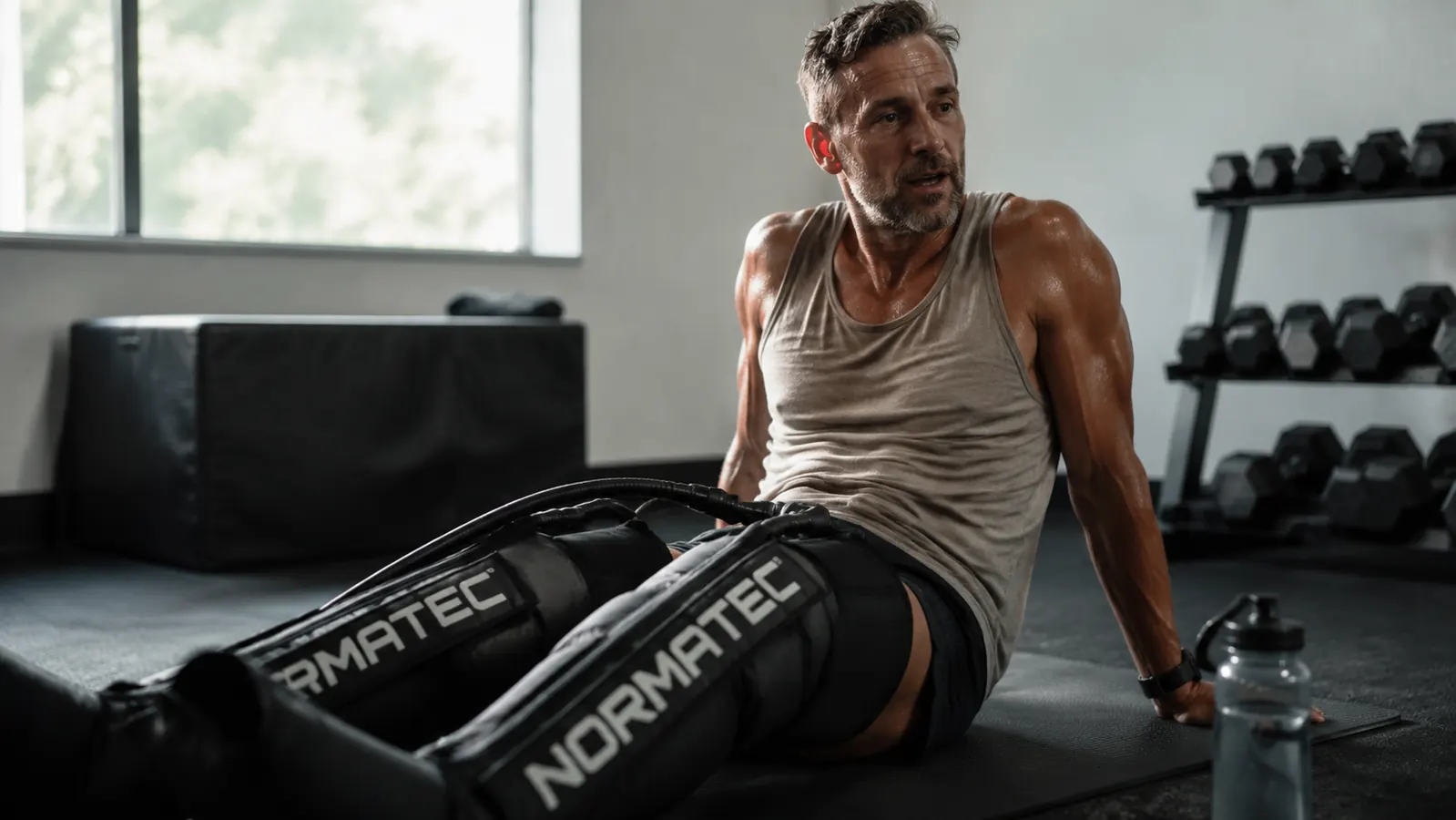
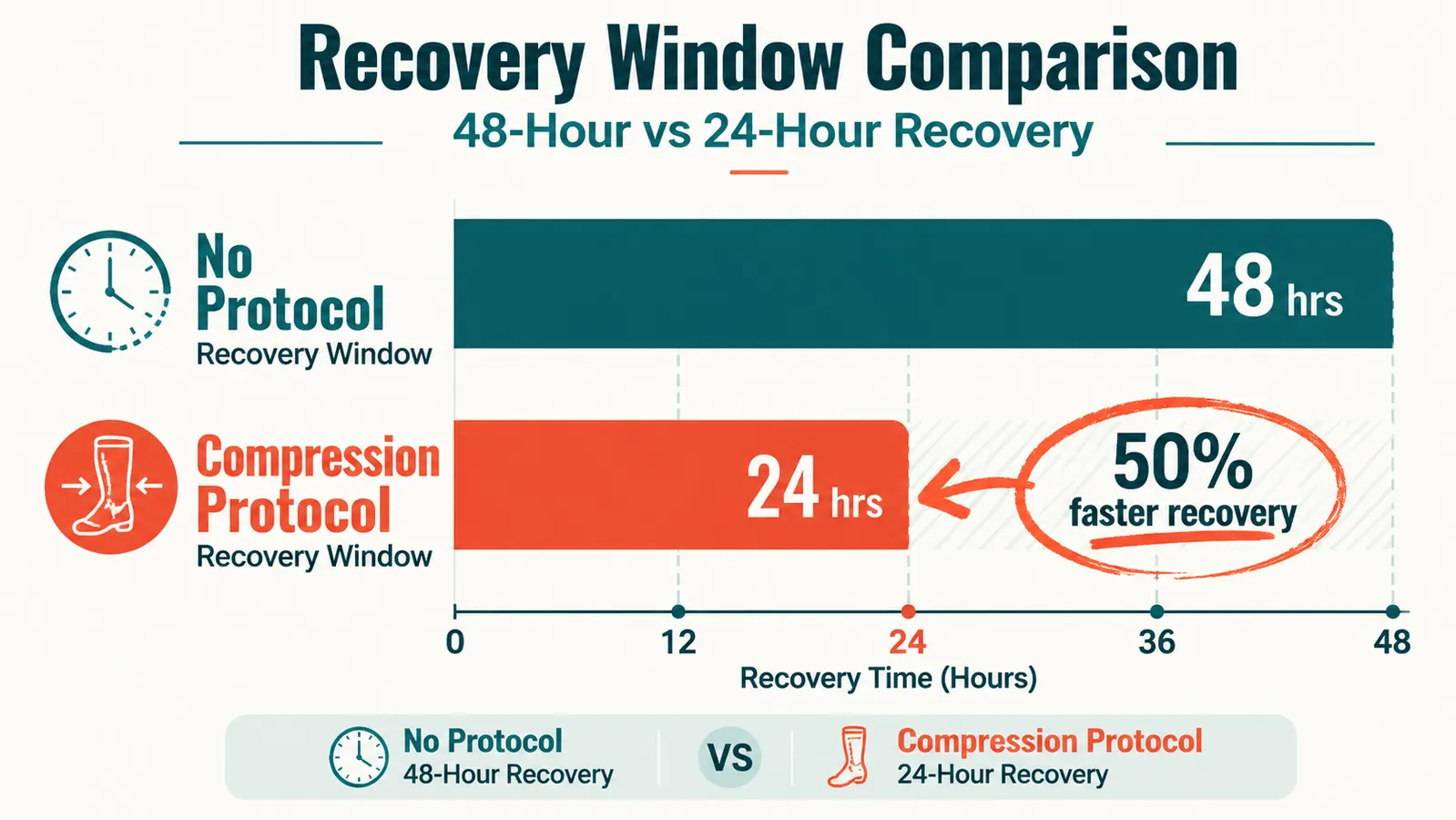
Two days after a long run, your legs still feel like concrete. That stiffness in the calves, the dull ache in the quads, the feeling that the stairs are your enemy until Wednesday even though you ran on Saturday morning -- it's a pattern most distance runners and endurance athletes know well. The frustrating part is that most of the advice for speeding up recovery is either vague ('drink more water, sleep more') or expensive ('get a weekly sports massage'). What actually works is more specific than that, and most of it fits into a structured protocol you can run at home.
This guide walks through a five-step leg recovery protocol built around air compression massage. Air compression works by using inflatable sleeves that cycle through squeeze-and-release cycles on your calves, feet, and lower legs. That mechanical pressure mimics the pumping action of walking, which helps move pooled fluid and metabolic waste (think lactic acid, though the physiology is more nuanced than that) out of the muscles and back toward the lymphatic system. The result, when you use it correctly, is noticeably less soreness the next morning. The FIT KING air compression leg massager is the specific tool referenced throughout this guide. It covers calves and feet in one session, runs at adjustable pressure settings, and costs a fraction of what professional recovery equipment runs.
Your legs are sore because fluid is pooling. Air compression helps move it out.
The FIT KING leg massager covers calves and feet with adjustable air compression and has over 20,000 Amazon reviews from runners, nurses, and people on their feet all day.
Amazon Check Today's Price on Amazon →Step 1: Do Not Skip the First Hour Post-Run Window
The timing of your recovery work matters more than most people realize. Your muscles are most responsive to mechanical intervention in the 30 to 90 minutes immediately after a long effort. Blood is already circulating at elevated rates, capillaries are dilated, and the lymphatic system is more active. If you wait until bedtime or the next morning, you've missed the window where compression does the most work.
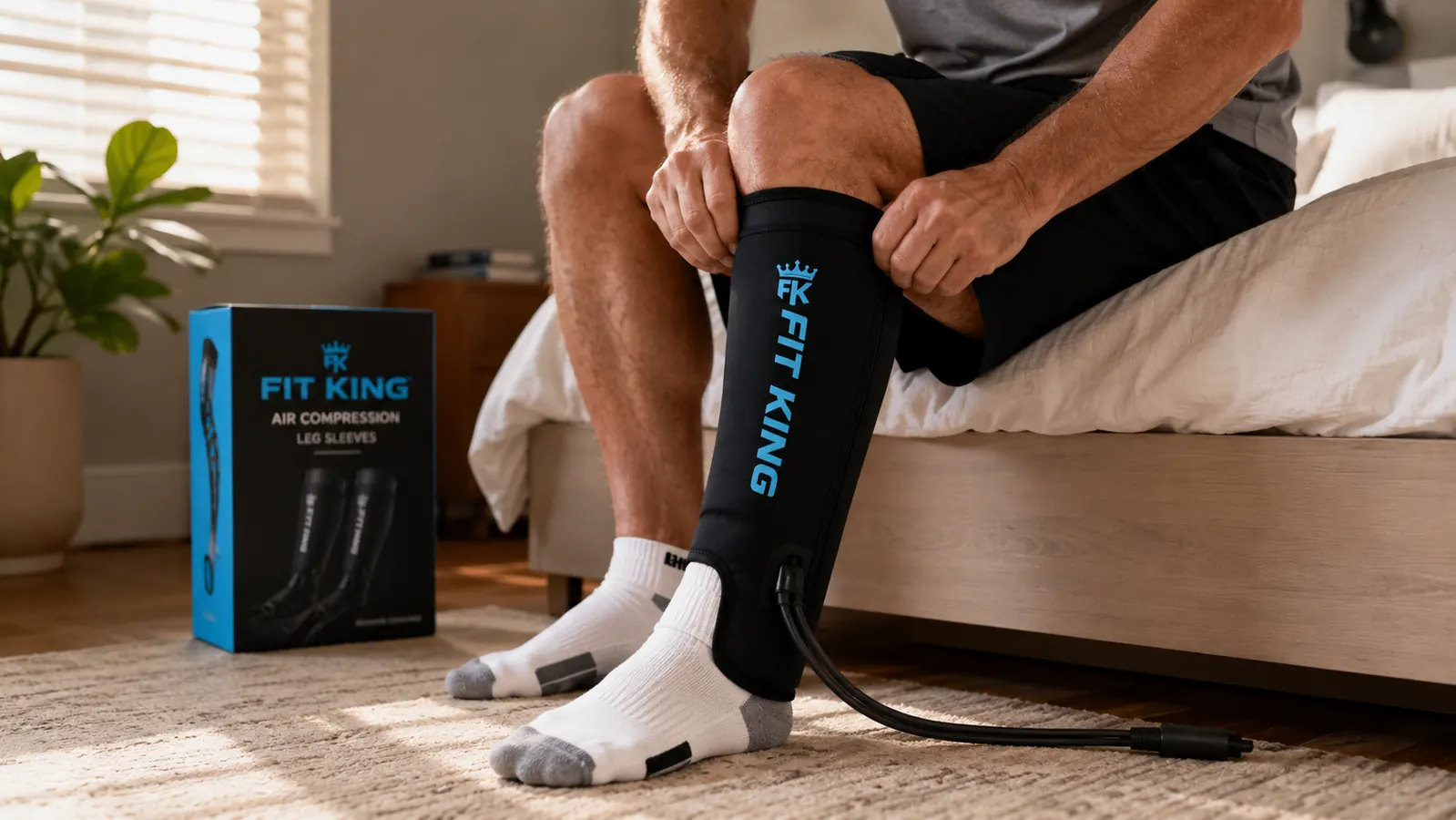
After you finish your long run -- and after you've cooled down and changed out of wet gear -- set a 20-minute compression session as the first recovery item on your list. Do it before you eat the big post-run meal. Do it before the couch pulls you in. It takes about 60 seconds to strap the FIT KING boots onto your calves and feet, and from there you're sitting still anyway, so you can eat, drink water, and scroll your phone while it runs. The sessions are 20 to 30 minutes at the default cycle. Start at the lowest pressure setting (level 1 or 2) and let your body adjust before stepping up.
The practical shortcut: put the boots right next to your post-run chair before you leave for your run, so there's no friction between finishing and starting the session. The hardest part is building the habit. The machine does the rest.
Step 2: Set the Right Pressure Level for Muscle Type
Not all leg muscles respond the same way to compression pressure, and running in particular creates different fatigue patterns across different parts of the leg. After a long run, your calves tend to be the most locked up because they've been absorbing impact and controlling push-off for the full distance. Your feet may be swollen from cumulative impact, especially if you're running over 10 miles. Your quads accumulate fatigue differently, often peaking in soreness 24 to 48 hours later (the classic DOMS pattern).
For calves, a moderate pressure setting is most effective. High pressure on fatigued calves can feel uncomfortable and doesn't improve the fluid-movement effect -- it just adds sensation. The FIT KING unit runs 3 to 4 pressure levels depending on the model, and level 2 to 3 is where most runners report the best balance of sensation and function on their calves. For feet and ankles, a lighter setting is usually more appropriate right after a run when tissue is more sensitive. Give it two or three sessions before you settle on your preferred level. The right setting is firm enough to feel the compression cycles clearly but not so tight that you're tensing the muscle to brace against it.
Step 3: Elevate While You Run the Session
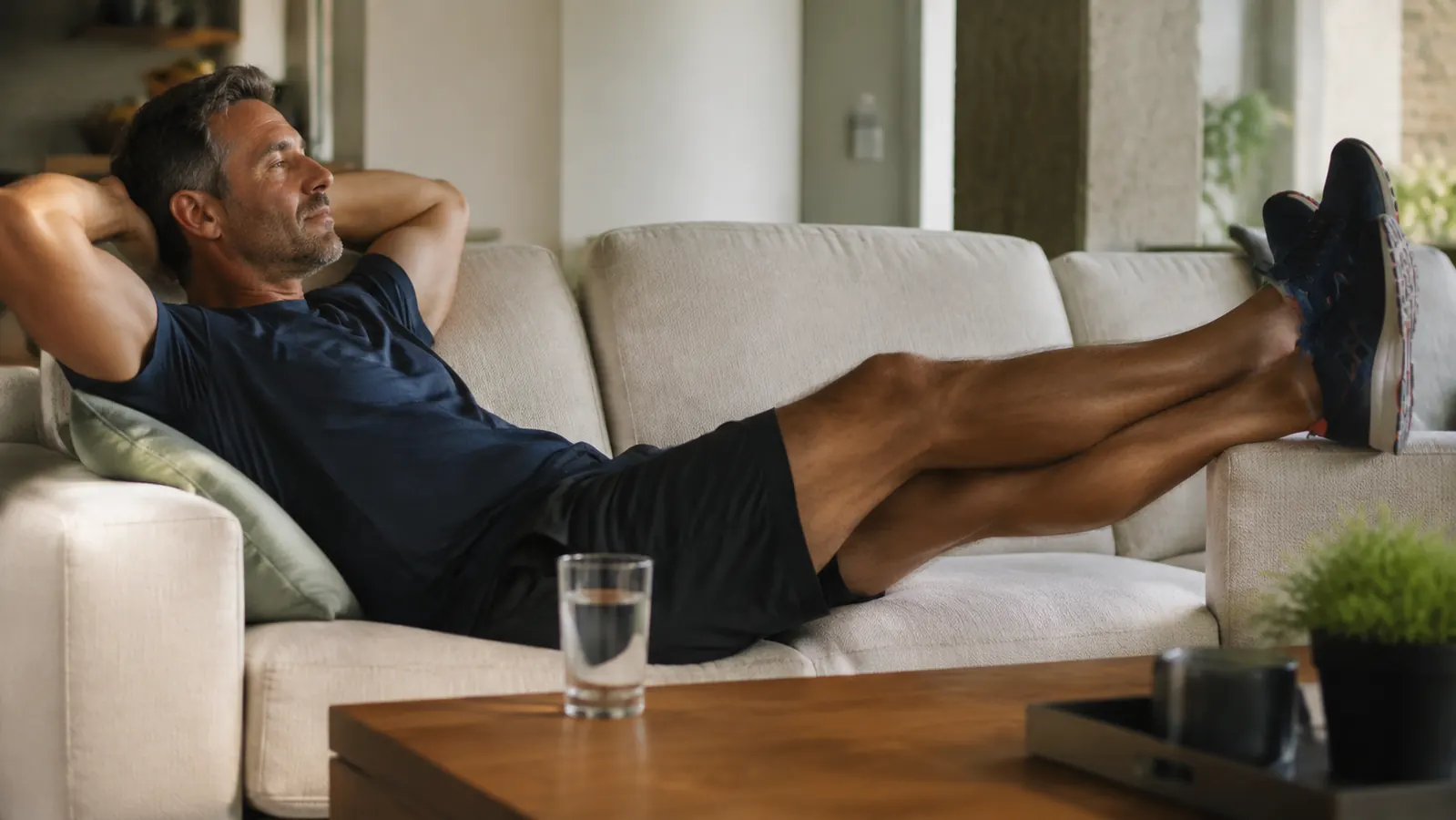
Air compression and elevation are a natural pair, and the combination is meaningfully better than compression alone. When you lie back with your legs at or above heart level, gravity assists the fluid-drainage process that compression is driving. The lymphatic system does not have its own pump (unlike the circulatory system, which has the heart); it moves fluid via muscular contraction and external pressure. Give it the assist of gravity and the process moves faster.
The setup is simple: sit in a recliner, or lie on the floor with your feet propped on a couch cushion or a foam roller, or lie on your bed with two pillows stacked under your calves. The FIT KING air hose is long enough to reach from most seated or reclined positions to the control unit sitting on the floor or beside you. You don't need a specialized recovery chair. The combination of 20 minutes of compression plus elevation, immediately post-run, gives you the mechanical benefit of a manual lymphatic drainage session at a fraction of the cost.
The lymphatic system has no pump of its own. Compression plus elevation gives it the mechanical assist it needs to drain fluid from your legs after a hard effort.
Step 4: Hydrate Aggressively Before and During the Session
Compression massage moves fluid, but if you're dehydrated coming off a long run, there's less fluid volume in your bloodstream and the recovery process slows. Hydration and compression are interdependent. Drink 16 to 24 ounces of water before you start your compression session and keep a bottle within reach during the session. If you were out for more than 90 minutes, adding some electrolytes (sodium, potassium, magnesium) to that water helps your body actually retain the fluid you're taking in rather than passing it straight through.
The order of operations that works well in practice: finish your run, drink 12 ounces of water immediately, cool down for 10 minutes, strap on the compression boots, drink another 12 ounces during the 20-minute session, then eat your post-run meal afterward. This sequences hydration and compression together rather than doing them separately at different times of day, which is how most runners approach recovery -- and why it takes them two days to feel right.
Step 5: Run a Second Short Session the Next Morning
The single biggest mistake in recovery from long runs is treating it as a one-time event rather than a process that continues into the next day. DOMS, the delayed-onset muscle soreness that peaks 24 to 48 hours after a run, is partly driven by inflammation. The inflammatory response is normal and necessary for adaptation, but excess fluid in the tissue is what creates the stiffness and tenderness. A second compression session the morning after your long run targets exactly that phase.
This second session can be shorter -- 15 minutes instead of 20 -- and at a slightly lower pressure since the tissue may still be sensitive. Do it before your first meal of the day. You don't need to be in any specific position for this one; sitting upright in a chair works fine. The goal is not to replace the previous evening's session but to continue the fluid-movement process into the day-after inflammation window. Most runners who add this second session report feeling ready to train again a full day earlier than usual.
The FIT KING boots are designed for repeated daily use, so running back-to-back sessions on consecutive days is well within how the product is built to function. Nothing about the protocol requires rest days between uses. The motor and compression chambers are rated for regular daily operation.
What Else Helps (And What's Optional)
Air compression handles the fluid-movement and circulation side of leg recovery well. But it works best as part of a broader protocol that also addresses muscle tissue quality and range of motion. Here's what's genuinely worth adding, and what's not worth overthinking.
Foam rolling before your compression session can help break up adhesions in the calves and IT band before you ask the compression to move fluid through those areas. Five to eight minutes on a roller, focusing on the calf-to-Achilles junction and the outer quad, is enough. You don't need a 30-minute foam-rolling routine. Cold water immersion (contrast showers, or if you have access, a cold soak) can be layered with compression for acute soreness, but most people find it impractical after every long run, and the research on cold therapy for endurance athletes is more mixed than the marketing suggests. Sleep is still the highest-leverage recovery input and no piece of equipment compensates for chronically bad sleep. Address sleep first, then layer tools on top.
What's genuinely optional: expensive massage guns on fatigued tissue immediately post-run (they can increase inflammation if used aggressively), static stretching in the hour after a hard run (connective tissue is more injury-prone when warm and fatigued), and ice baths for routine long runs (they suppress the adaptation signal that makes you fitter over time, which matters for training athletes more than casual runners). The compression protocol in this guide is designed to support recovery without interfering with adaptation.
For a detailed look at how air compression compares to the recovery tools most runners already own, see the 10 reasons air compression recovery boots work article on this site. And if you're considering the FIT KING specifically for regular training use and want to know how it holds up after months of sessions, the long-term FIT KING leg massager review covers the real-world durability details.
Still waiting two days to feel normal after long runs? A 20-minute compression session changes that math.
The FIT KING covers calves and feet with adjustable pressure compression. Over 20,000 reviews, rechargeable, and built for the kind of daily use this protocol calls for.
Amazon Check Today's Price on Amazon →