

I spent two weeks reading WaveRoller reviews before I bought one. Most of them told me the same four things: it vibrates, it is pricier than a plain roller, the battery is fine, and the reviewer recommends it. What they did not tell me was whether the Bluetooth app is worth opening more than once, which specific muscle groups actually benefit from vibration versus which ones respond about the same as a plain roller, and why someone might want this instead of a massage gun that does the same job in a fraction of the footprint. Those are the questions I went in wanting answered. After regular use, I have answers, and some of them surprised me.
The Therabody WaveRoller runs $149.99 on Amazon. That is the honest starting point for everything that follows. At that price it is competing with quality percussion massage guns, full-length foam rollers with handles, and a few months of actual physical therapy appointments. The question is never just 'does it work' but 'does it work well enough to justify that specific number.' I am going to try to answer that honestly.
The Quick Verdict
A genuinely good vibrating roller for large lower-body muscles, but the Bluetooth app is nearly useless and the price requires real commitment to rolling consistently to pay off.
Amazon Check Today's Price →If the price question is your main hesitation, here is what the WaveRoller actually costs today before you read further.
The Therabody WaveRoller (ASIN B08HW7GXSQ) includes a USB-C charging cable. Five vibration speeds, no subscription, and a build quality that holds up through heavy training schedules.
Amazon Check Today's Price on Amazon →The Bluetooth App: What It Does and Why I Stopped Using It
Therabody makes a point of the WaveRoller's app connectivity. Pair it via Bluetooth to the Therabody app, follow guided routines, and theoretically get a more structured recovery session. In practice, I opened the app four times. The guided routines are genuinely well-designed, walking you through muscle-group sequences with timing and cueing that a beginner would find useful. If you have never used a foam roller before and want structure to get started, the app is worth running through once or twice.
After those first sessions, though, I never opened it again. The practical problem is that foam rolling while watching your phone is awkward. The phone needs to be propped at eye level or you are craning your neck to read cues while you are supposed to be relaxed and rolling. The app cannot feel what your tissue is doing. Any experienced person rolling will naturally slow down, pause, and shift where they need to, independent of whatever the app timer is counting. The Bluetooth feature is not bad. It is just mostly irrelevant after the first few uses. Do not let its presence sway your purchase decision in either direction.
Which Muscles Actually Benefit From the Vibration (A Muscle-by-Muscle Breakdown)
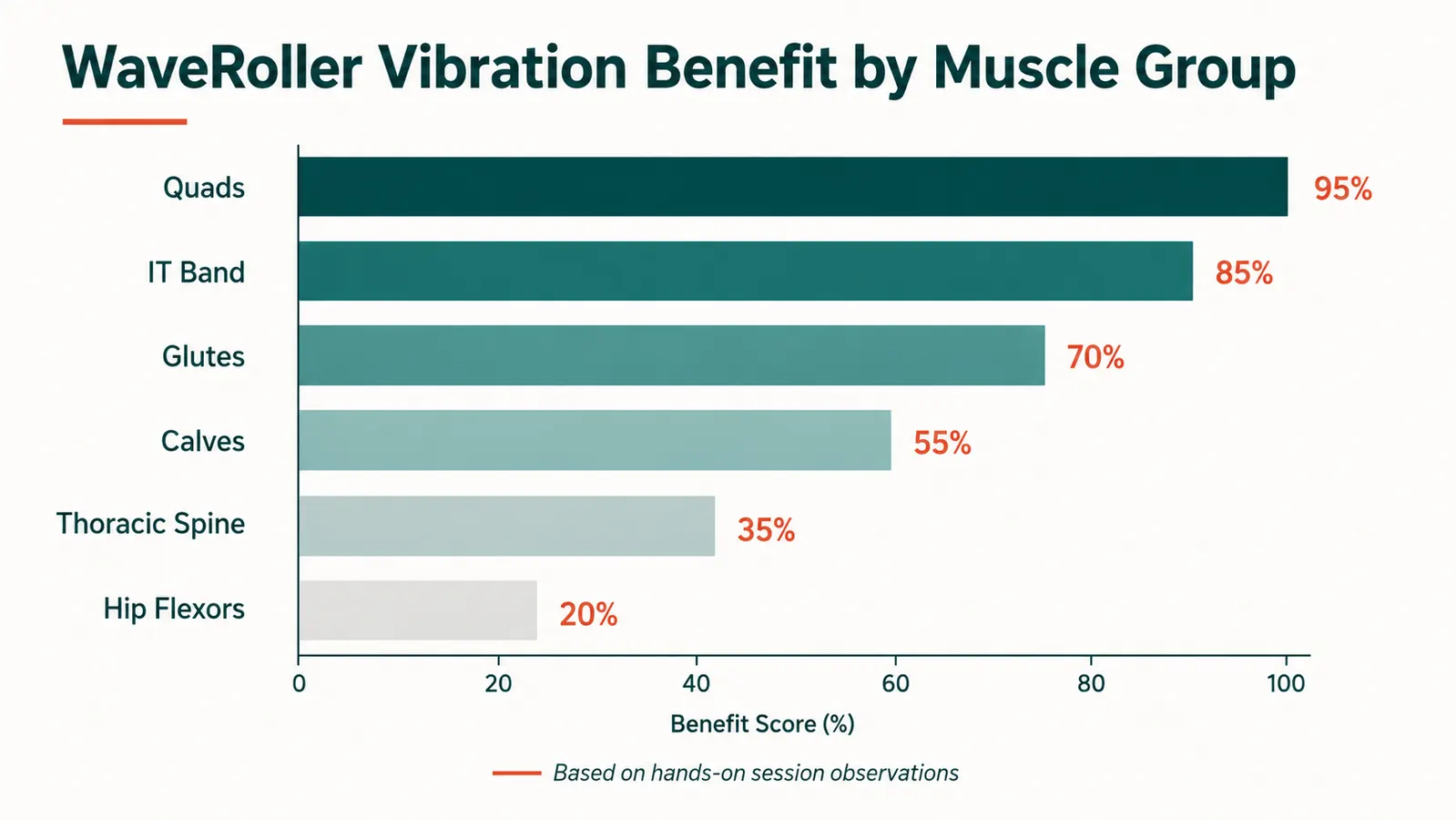
This is the question most reviews skip, probably because it requires enough session experience to say something specific. After working through a full-body rotation across many sessions, here is what I found. Quads are where the vibration delivers the clearest payoff. The quad is a large, dense muscle that tends to resist external pressure with involuntary tension. Vibration at Speed 2 or 3 noticeably softens that resistance without you having to force it. You get deeper into the muscle faster. Same story for the glutes and the hip flexors, two areas where people either do not roll at all or roll too briefly because the pressure is uncomfortable. Vibration makes those zones manageable enough to stay with them.
The IT band is more nuanced. The IT band itself is connective tissue, not muscle, and it does not release the way a quad does. Rolling it at all is about stimulating the surrounding tissue and addressing the muscles at either end (TFL at the hip, biceps femoris at the knee). Vibration here is helpful for tolerating the session, not for changing the tissue mechanics. I use Speed 1 on the IT band because the pressure alone is already significant. Adding aggressive vibration on top of that serves no purpose and risks just clenching against the sensation.
Calves and thoracic spine are where the WaveRoller offers the least marginal benefit over a plain roller. Calves are self-loading: you are sitting with your leg across the roller and modulating pressure with your arms. A plain firm roller and a vibrating one produce similar outcomes because the calf muscle is not large enough to require vibration to release. Thoracic spine work is slow and deliberate by nature. You are parking in one spot and extending over the roller for posture and mobility. The vibration is pleasant but does not change what the movement accomplishes. If those two zones are your primary targets, the price premium is harder to justify.
The Wave Surface: What the Texture Actually Does in Practice
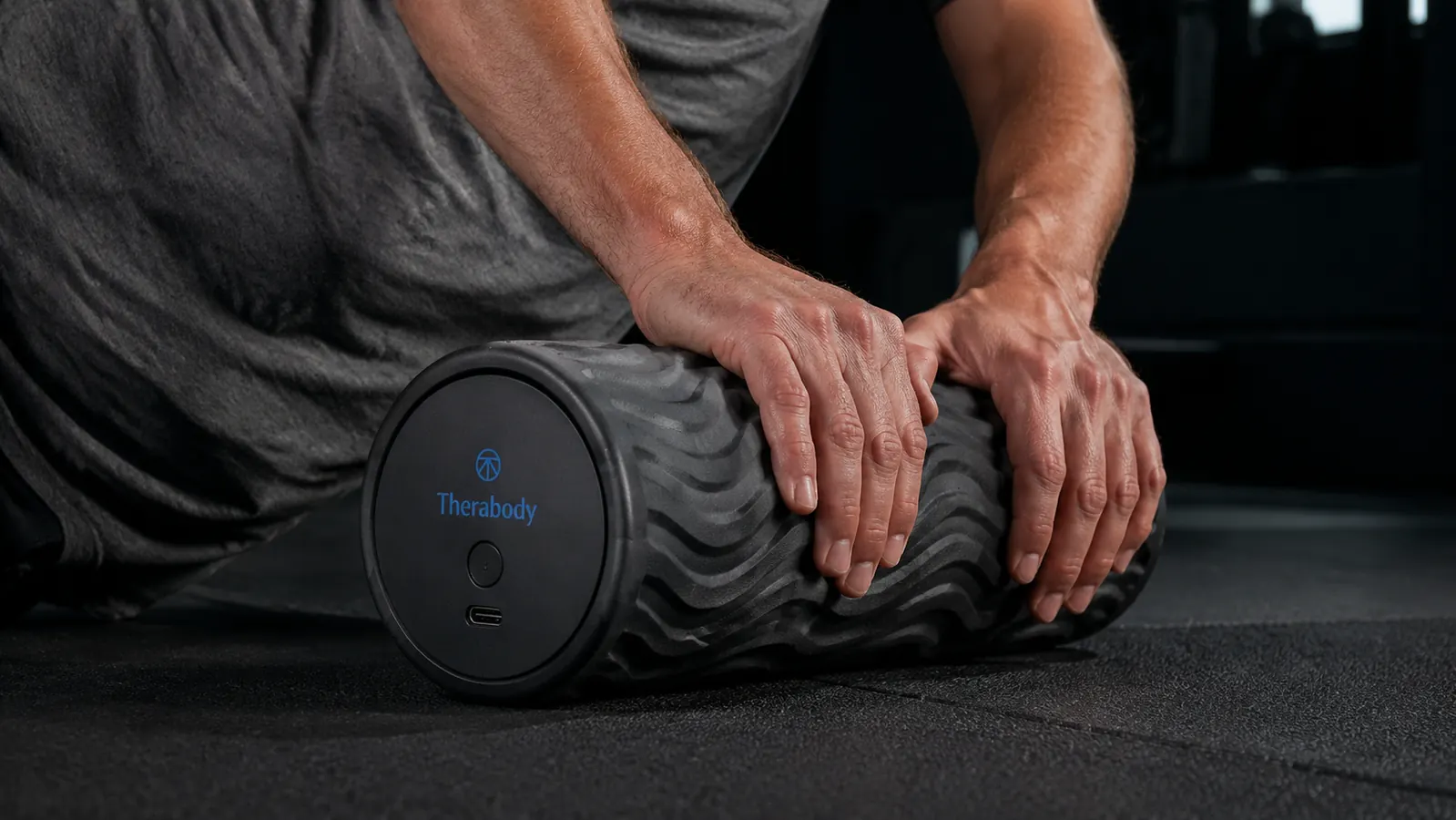
The WaveRoller's surface is not smooth foam like a basic roller. It has a subtle wave-ridge pattern that Therabody says improves surface contact and massage effect. In honest use the difference is real but modest. The ridges create slightly more variable pressure as you roll across them, which means you are not dragging a uniform cylinder across the same spot every pass. For someone who has used a smooth roller for years, you notice the difference in the first session. Whether that difference matters in long-term recovery outcomes is harder to say. I would put the wave texture in the same category as the Bluetooth app: a genuine feature that is not the reason to buy or skip this roller.
What does matter is the foam density. The WaveRoller uses high-density EVA foam over the vibrating core, and the firmness lands in a useful middle ground. It is firm enough to produce real pressure on large muscle groups but not so punishingly hard that you cannot stay in one spot for 60 to 90 seconds. Some cheaper rollers are so dense that they bruise more than they release. The WaveRoller avoids that.
The wave surface and the Bluetooth app are both real features. Neither one is the reason to buy this roller. The reason is the vibration's effect on large lower-body muscles specifically, and whether you will actually use it consistently at $150.
What I Liked
- Strong, even vibration that you actually feel through the wave surface, not a buzzy gimmick
- Dense, durable foam that holds its shape under full body weight better than cheap rollers
- Generous surface area covers quads, glutes, and hips quickly
- Quiet enough to use while watching TV without raising the volume
- Holds a charge across plenty of sessions before needing a top-up
Where It Falls Short
- Premium price sits well above generic vibrating rollers that do the basics
- At roughly 12 inches it is a touch shorter than some standard 13-inch rollers
- Charging port on the end cap is awkward to reach when the roller is stood on end
- Single button cycles through speeds, so you cannot jump straight to the one you want
- The Bluetooth app is a novelty most people stop opening after the first week
WaveRoller vs a Massage Gun: The Comparison Most Reviews Avoid
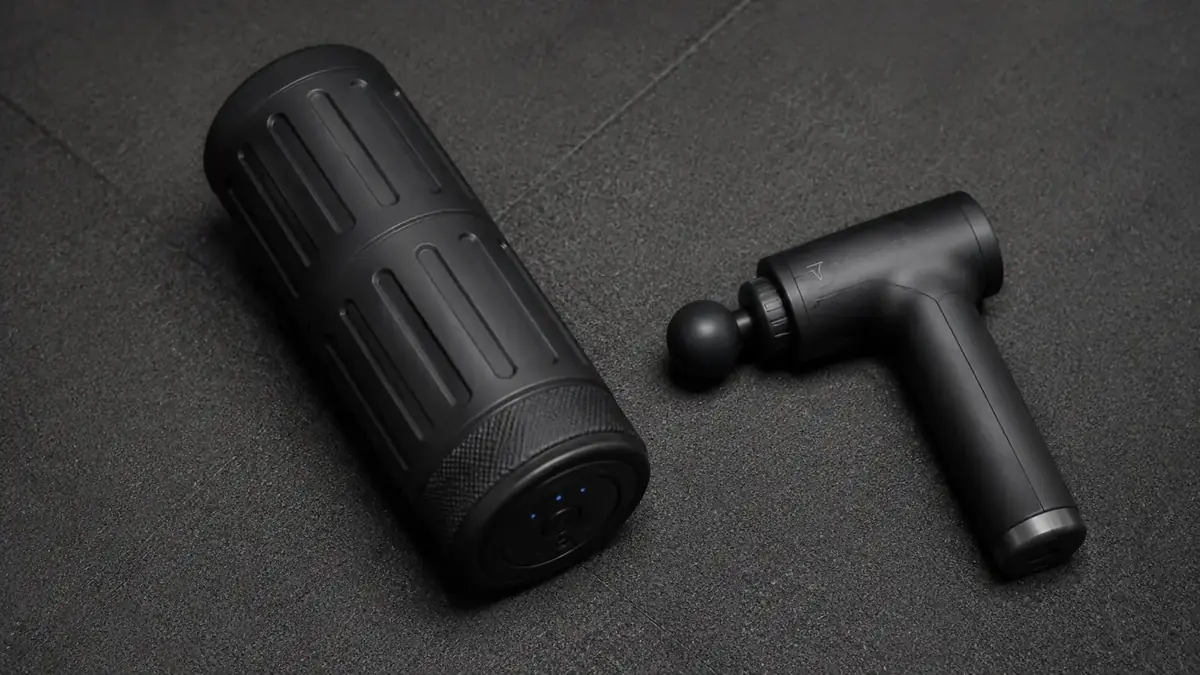
If you are spending $150 on recovery, the WaveRoller is competing directly with percussion massage guns in the same price bracket. The distinction matters and most vibrating-roller reviews pretend the massage gun does not exist. Here is the honest breakdown. A massage gun delivers percussive force to a targeted spot with a small attachment head. It is faster for spot treatment of a specific knot or trigger point and works well on muscles you cannot easily roll. The upper traps, rhomboids, and lats are almost impossible to self-roll effectively. A massage gun handles them without gymnastics.
The WaveRoller wins on surface area and body-weight loading. When you roll a quad or a glute, your own body weight creates the compression pressure. The vibration then works on top of that loaded position. A massage gun head is small, and while the percussion goes deeper, you are covering a narrow zone at a time. For someone whose main recovery need is large muscle groups after leg-heavy training, running, or cycling, the WaveRoller covers more tissue per minute than a gun. For someone who holds tension primarily in the neck, shoulders, and upper back, a massage gun is likely the smarter $150 spend.
The honest answer is that these tools complement each other rather than replace each other. But if you are choosing one, map your primary soreness zones first. Lower body dominant: WaveRoller. Upper body and spot treatment dominant: massage gun.
The Premium Price: What You Are Actually Paying For vs Generic Alternatives
There are vibrating foam rollers on Amazon for $40 to $60 from brands you have never heard of. They vibrate. They have foam on the outside. They cost less than half what the WaveRoller costs. I want to be direct about this because I think too many recovery reviews pretend that brand name is just marketing. With Therabody it is not entirely marketing. The motor quality in the WaveRoller is noticeably smoother than budget vibrating rollers I have used. Budget models often have a rattling, uneven vibration that feels mechanical and slightly annoying. The WaveRoller vibrates with a consistent, even frequency that actually feels intentional.
The foam density and construction also hold up better over time. Cheap vibrating rollers tend to develop surface compression and lose their firmness within a few months of regular use. The WaveRoller does not show that degradation in the timeframe I have used it. So part of what you are paying for is durability and motor quality. Whether that is worth the full price gap versus a $55 alternative is a judgment call. I would say: if you are buying a vibrating roller as a serious training tool you intend to use several times a week for years, pay for quality. If you are curious and want to test whether vibration appeals to you before committing, try a cheaper option first.
Practical Annoyances the 4.4-Star Rating Smooths Over
The WaveRoller has a 4.4-star rating across 1,771 reviews. That is a solid, trustworthy number. It also rounds off some specific friction points that are worth knowing. First: the roller is 12 inches long, not 13. That one inch matters if you are used to a 13-inch standard roller and want to cover the full width of your back in one pass. The WaveRoller requires a slight shift to cover both sides of the thoracic spine, which a longer roller clears in a single position.
Second: the charging port is on the end cap, which sits against the floor when the roller is resting horizontally. That means you either have to lean the roller upright to charge it or flip the end cap up and plug in at an angle. It is a minor design decision that seems obvious in hindsight but was not considered in use. Third: the single-button speed control requires you to cycle through all five speeds in order. If you want Speed 2 but the roller is currently at Speed 4, you push through 5 and back to 1, then to 2. For a $150 product, a two-button speed interface would have been the right call. None of these are reasons to skip the purchase. All of them are things you will notice in the first week.
Who This Is For
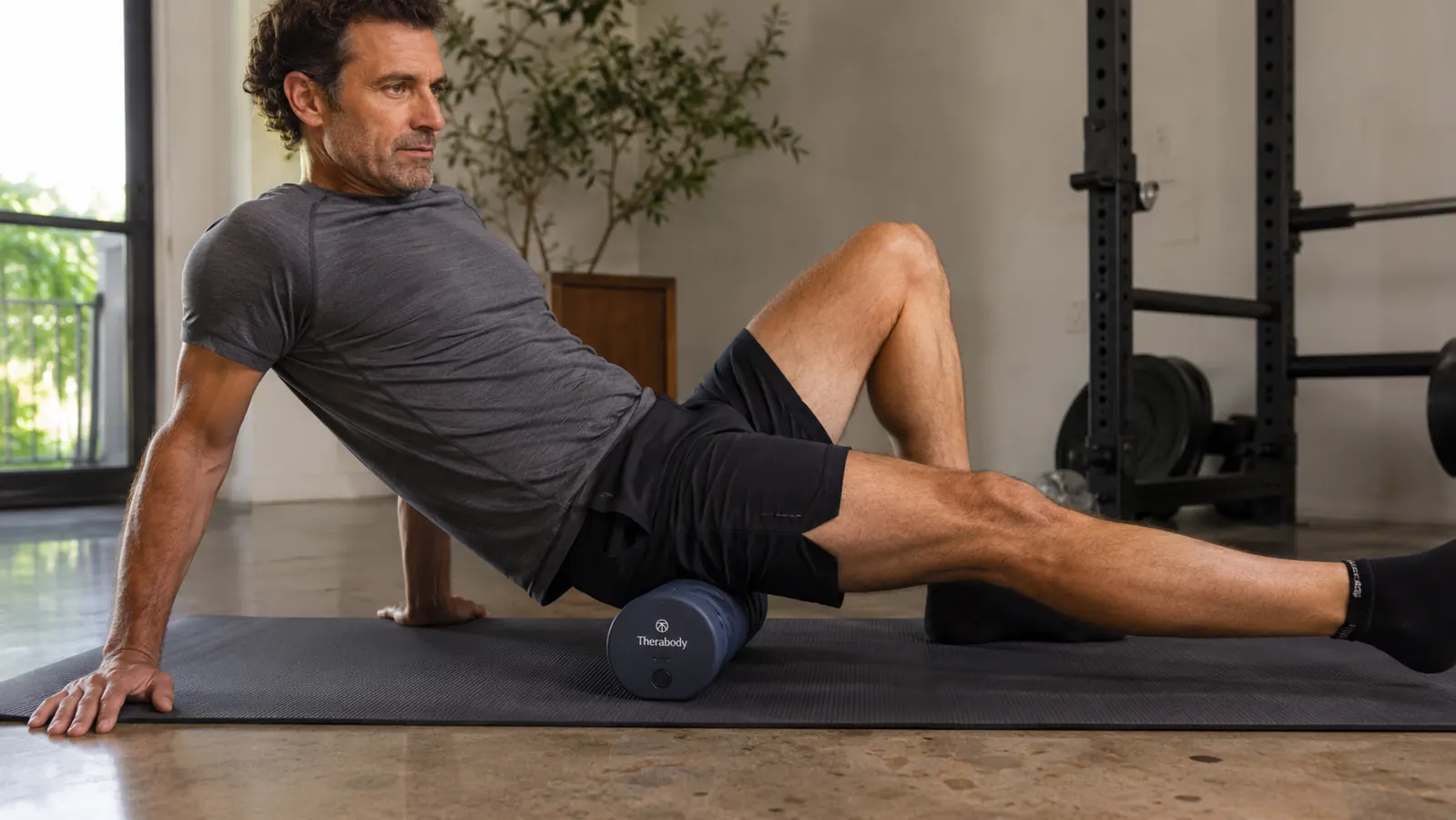
The WaveRoller makes sense for active adults who are primarily managing lower-body soreness from running, cycling, hiking, or resistance training heavy with squats and deadlifts. If your training volume is high enough that you are rolling four or more times a week, the quality difference in motor smoothness and foam durability will show up over time. It also makes sense for someone who has tried plain rollers and found that the discomfort made them stop early or skip sessions entirely. The vibration genuinely reduces that barrier. You can compare this product directly against standard options in our Therabody WaveRoller vs Standard Foam Roller breakdown, which goes into head-to-head detail.
Who Should Skip It
Skip the WaveRoller if most of your soreness and tightness lives in the upper body, neck, and shoulders. A $150 massage gun will serve that need better. Also skip it if you roll casually, once a week or less, or have never established a consistent rolling habit. The price premium over a plain roller requires consistent use to pay back. If your recovery toolkit is already covered by a massage gun and you are thinking about adding a roller, a $25 high-density foam roller fills that gap without duplicating what you already have. And if you are considering this for general relaxation use rather than active recovery, the WaveRoller is probably more tool than the use case needs. Our WaveRoller advertorial piece covers the skeptic-to-convert journey in more personal detail if you want a different angle on the same decision.
Still on the fence about the price? Check what the WaveRoller is running today before you decide.
The Therabody WaveRoller (ASIN B08HW7GXSQ) is the version I have personally used. Five vibration speeds, USB-C charging, and the build quality that justifies the Therabody name for serious recovery use.
Amazon Check Today's Price on Amazon →